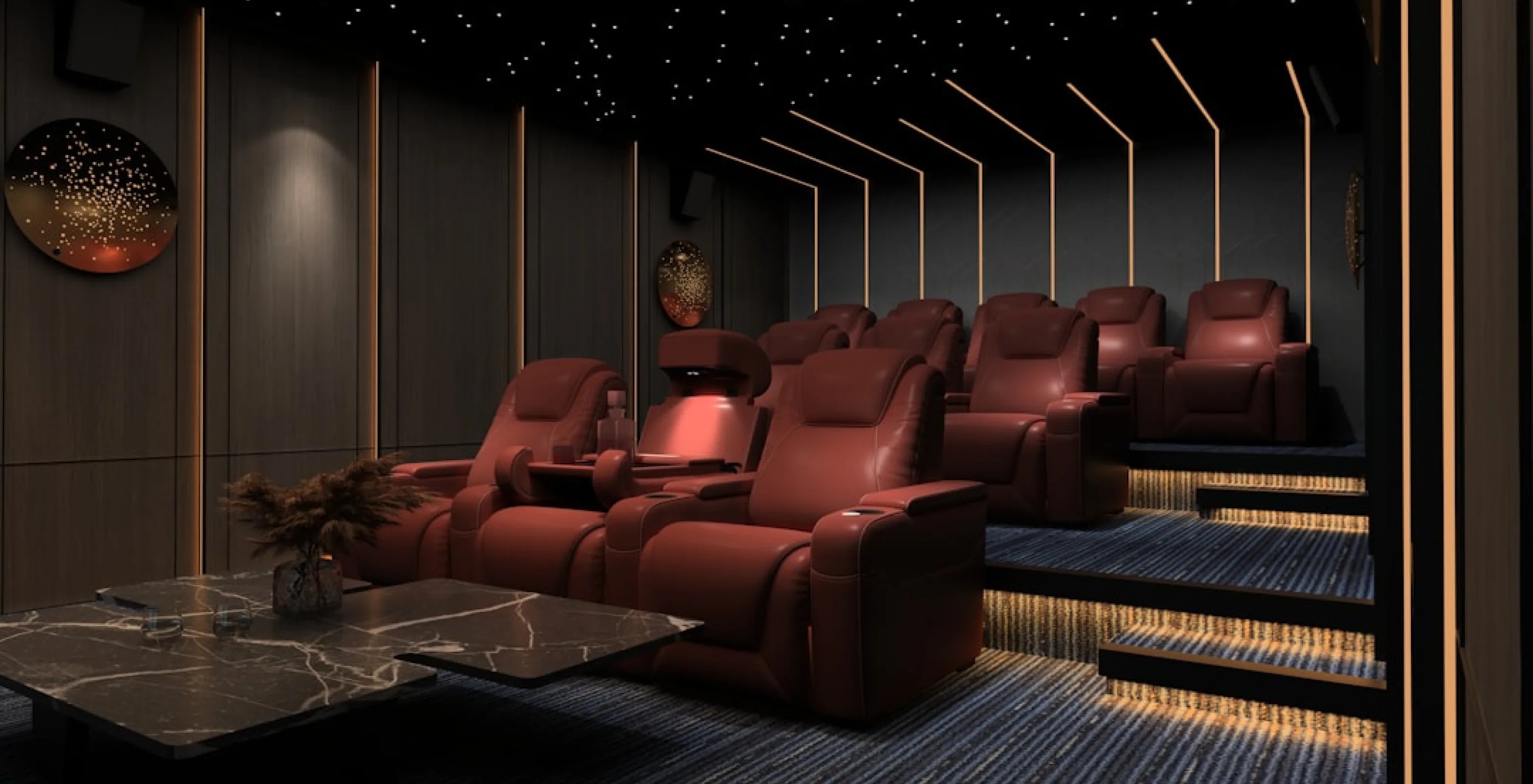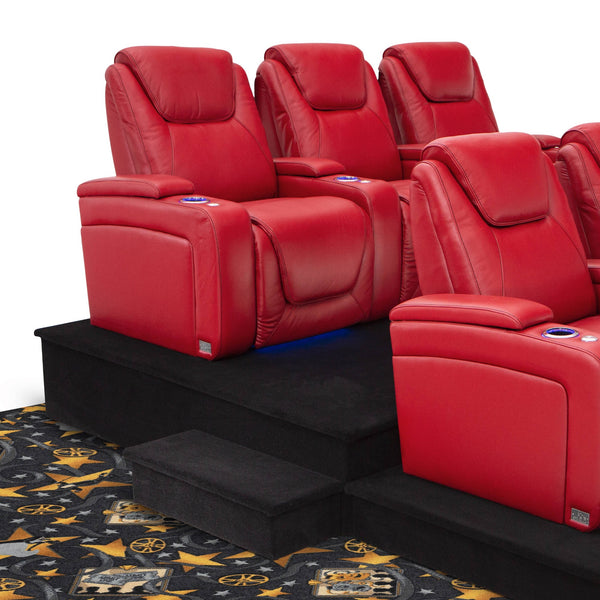


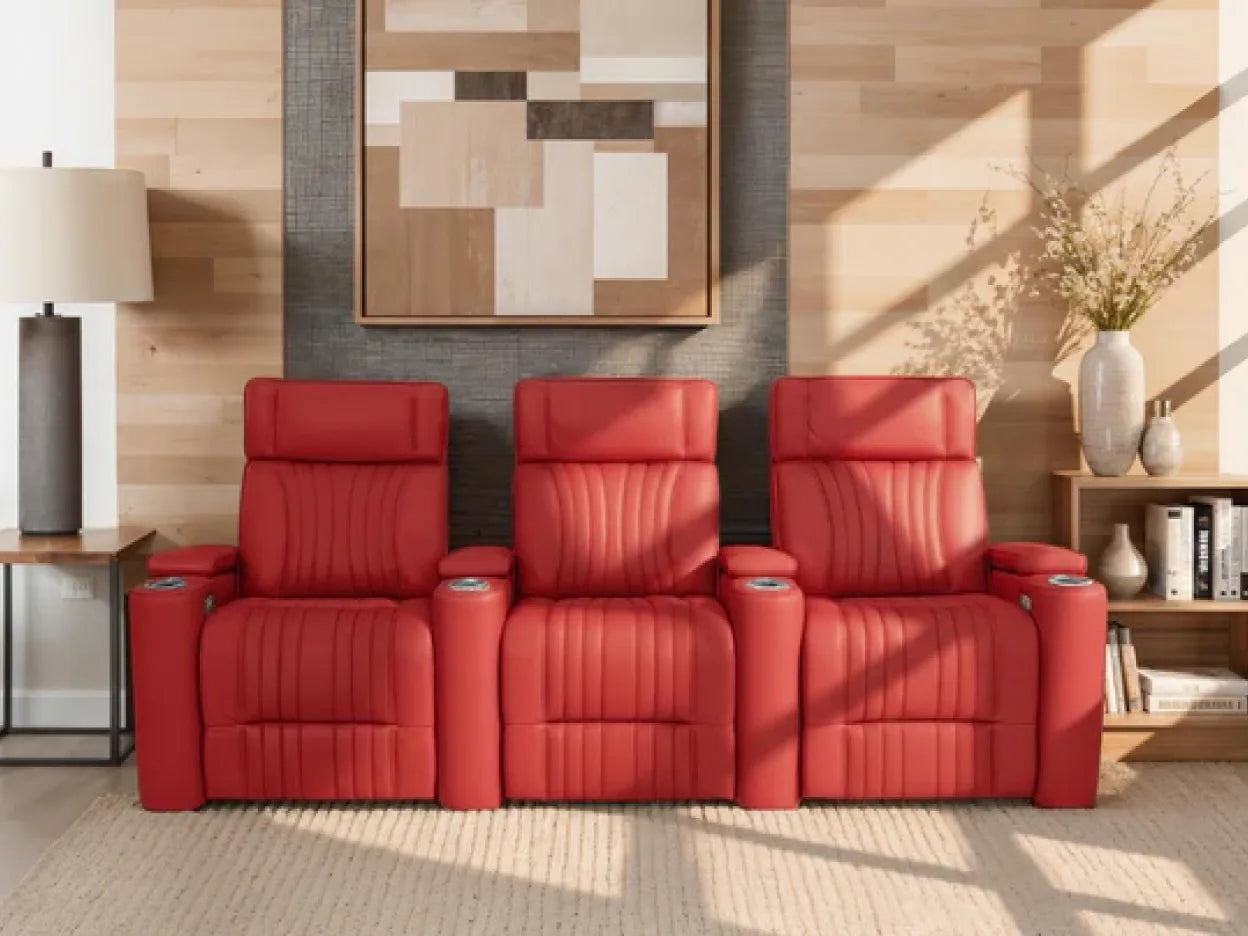


Most home theaters run into the same problem: fill the front row, and the second row loses its clean view of the screen. A home theater riser fixes that by lifting the back row just enough to restore the sightline. SoundRight riser platforms do it in 7" and 14" heights, prebuilt and carpeted, so the fix drops straight into the room you already have.
Built for the Seating You Already Own
You don't have to bend your neck, lean sideways, or rearrange chairs every time you hit play. The platform does the work: it adds the right amount of lift so your layout works the way you planned, without changing anything else in the room.
Every SoundRight platform uses heavy-duty hardwood framing, built to hold steady under heavier reclining seats — powered loungers, zero-gravity recliners and models with power headrests included. A sofa or sectional back row works the same way: place platforms side by side to cover the row's width, and the whole thing lifts evenly.
How tall should a home theater riser be?
Seven inches is the most common lift for a second row, and 14 inches for a third row behind it. The goal is for the back row's eye level to clear the heads of the row in front while the lower edge of the screen stays in view.
The right height for your room comes down to three measurements: how high the bottom of the screen sits, how far apart the rows are, and how tall your viewers are when seated. A low screen or tightly spaced rows need more lift; a high screen or deep row spacing needs less.
Ceiling height sets the upper limit, since a platform raises every head by its full height. SoundRight platforms come in exactly these two heights, so a three-row room steps up evenly: floor, 7", then 14". If you're between sizes, call our design line and we'll run the numbers with you.
How to choose a home theater riser platform
Pick the height first (above), then match the width and depth to your seats.
Width: combine platforms to cover the row
Each platform comes prebuilt in a 50", 60" or 68" width. Use one, or place two side by side, to cover the full width of your row.
| Row | Typical row width | Platforms that cover it |
|---|---|---|
| 2 seats | 61–72" | One 68" (rows up to 68"), or two 50" |
| 3 seats | 85–103" | Two, e.g. 50" + 50" (100") or 50" + 60" (110") |
| 4 seats | 109–135" | Two, from 50" + 60" (110") up to 68" + 68" (136") |
Depth: check 70" against your recline
Every platform is 70" deep, sized to fit most theater seating. Compare that with the fully reclined depth on your recliner's product page, and keep a clear walkway in front of the platform's edge — it becomes a step up into the row.
Finish: carpet and a lighting lip
The top and sides are carpeted in black, gray or tan over the hardwood frame, which cuts noise and keeps seats from sliding. A lip built into the top level makes it easy to add your own lighting along the edge, so guests can find the step in a dark room.
Riser platform or BACKROW seats for your second row?
Choose a riser if you're keeping seats you already own or want a sofa in the back. Choose BACKROW seats if you're buying a new second row and would rather skip the platform.
- A riser makes more sense when you're reusing recliners you already have, putting a theater sofa or sectional in the back row, or building three rows.
- BACKROW makes more sense when you're buying the second row new, want nothing built underneath, or expect to rearrange the room later.
See how the no-platform option works in our back row theater seating collection, or browse tiered seating without risers to see front and back rows paired together. For the full sightline math and a DIY-vs-prebuilt breakdown, see the complete home theater riser guide {{link: the-complete-home-theater-riser-guide}}.
SoundRight riser platforms at 4seating
- SoundRight 7" Home Theater Riser Platform: the standard second-row lift. It's 70" deep, comes in 50", 60" or 68" widths, and is carpeted in black, gray or tan.
- SoundRight 14" Home Theater Riser Platform: the third-row lift, with the same 70" depth, widths and carpet colors. It's listed with an optional riser step.
Then choose the seats that go on top. Browse all home theater seating, start with a row of 3 home theater seats, or pick from our theater sofas and sectionals for a lounge-style back row.
Adding a riser to a home theater increases usable seats and viewing angle without changing the room's footprint — the space just works harder. For help sizing the platform and the row on top of it, call our design line at 1-800-407-8665 with your room length, screen height and ceiling height. Free material samples help you match the riser to your carpet color, every order ships free curbside, and white-glove delivery with in-room placement and assembly is available as an add-on.