Browse more articles
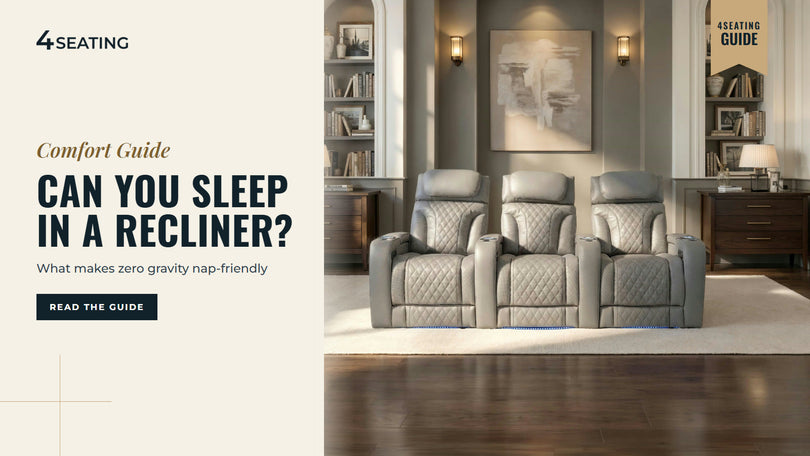
Can You Sleep in a Recliner? Zero Gravity Sleeping, Explained
It's the third quarter, or the second movie of the night. You've eased back into your seat, your eyes are getting heavy, and you're wondering whether that's actually fine or if you should get up. Dozing off in a recliner during a long movie is easy to do, and a short nap is a fine use for a supportive seat. What you shouldn't do is treat a home theater recliner as your bed: these seats are designed for sitting and reclining through a long movie or game, not for overnight sleep. The rundown: what makes a recliner good for sleeping through a nap, how the zero gravity position fits in, and where a recliner stops being the right tool for the job. Power lift chairs are a different category from home theater seating. What we feature is zero gravity recline home theater seating: recliners and rows built for watching movies and sports for hours at a stretch, which also suits a Sunday-afternoon nap. What Makes a Recliner Good for Sleeping A handful of features do most of the work, and they're the same ones that make a chair good for a three-hour movie marathon: a deep recline, adjustable head and lower-back support, and a surface that feels good to settle into. Quick check: sit back and recline fully. If your neck and lower back are both supported without you needing to prop a pillow anywhere, that chair is doing its job for a nap. A chair that only tips back a little leaves your neck doing the work the chair should be doing. A fixed headrest works for some body types and leaves others straining forward. A power headrest and power lumbar (an adjustable lower backrest cushion) let you set the seat to your own height, rather than settling for one shape. Here's how the features stack up for napping specifically: Feature What it does Why it matters for a nap Zero gravity recline Lifts your legs while your back eases down into a deep lounge position Lets you settle in and stay put for a nap Power headrest Most of 4Seating's zero gravity seats have one, and it adjusts to your height Tilts so the screen stays in view while you're reclined Power lumbar Many of 4Seating's zero gravity seats add it An adjustable lower backrest cushion you can set for a longer recline Heat and massage Many of 4Seating's zero gravity seats include it Warmth and gentle massage are designed to help you relax into the recline USB charging and LED base lighting Many models list USB-A and USB-C ports in the LED cupholders, plus LED base lighting Charge your phone and find your seat in the dark without a lamp The best recliner for sleeping through a nap is the same one that's built for a long movie, not a separate category of furniture. Zero Gravity and Sleep: What the Position Actually Does Zero gravity recline raises your legs while your back eases down into a deep lounge position. It's a bit like easing into a pool float: legs up, back eased down, nothing asking you to sit forward. "Zero gravity" is a nod to the "neutral body posture" NASA documented for astronauts in weightlessness (NASA technical report record). The seats are inspired by that posture, not NASA-designed, tested or endorsed. For a nap, that combination of raised knees and legs and a back eased down into a deep lounge is the reason zero gravity seating shows up so often in home theater rows. Browse our Zero Gravity Recline Home Theater Seats The Luminis Zero Gravity Home Theater Seating with Heat & Massage is a good example of the combination: zero gravity recline, power headrest, power lumbar and heat and massage in one seat. Start with a row of 2 and add a seat later if you need more room for guests. Prefer a sofa profile over individual recliners? The Endeavour HeatZero Italian Leather Home Theater Sofa keeps the same zero gravity recline built into a sofa-style seat, which suits a room where guests also need somewhere to sit down without reclining. Zero gravity doesn't change what the chair is for, it just makes the recline more comfortable to hold. Theater Seats vs. Sleeper Furniture: What Each Is Built For A theater recliner and a bed are built for different jobs. A theater seat is designed around a reclined viewing position for a few hours at a time: legs up, back supported, head angled toward a screen. A mattress is designed around full-body support for a full night, on a flat, even surface. That makes a zero gravity recliner a good fit for an afternoon nap, dozing through a second movie, or resting between innings. It isn't designed to be your regular nightly sleep surface. If regular overnight sleep is the goal, a bed or sleeper sofa is built for that job. For guests who just need somewhere to sit, browse our sofas and sectionals. Browse our Sofas and Sectionals A recliner is great for a nap, and not a stand-in for a bed. Tips for a Comfortable Nap in a Recliner A few practical adjustments make a bigger difference than the chair alone: Recline fully rather than halfway. A full zero gravity position is the one where the headrest and power lumbar are designed to work together. Use the power headrest rather than stacking a pillow. The headrest is built to match the backrest angle. Check your wall clearance before you recline. Wallhugger seats glide forward as they recline, so they can sit close to a wall. Clearance is the space a seat needs between its back and the wall when fully reclined, and it runs about 3" to 6.5" across Seatcraft models, so check the Specifications tab. The Luminis lists 3.5", for example. Plan your outlet. Power recline plugs into a standard 110v wall outlet, and in a row each seat may need its own. A licensed electrician can plan new outlets for you. Keep the room dim, not dark. LED base lighting helps you find your way to the seat without a bright overhead light. Set an alarm if you have somewhere to be. It keeps a short nap from turning into an open-ended one. If you're outfitting a room where naps and movie nights both happen, a power headrest row covers both uses without separate furniture for each. Browse our Powered Headrest Theater Seating Where to Start: 4Seating's Top Picks for Napping 4Seating's zero gravity recline comes as full rows, sofas, loveseats and single seats, so most theaters start with a row of 2 to 5 seats. Luminis Zero Gravity Home Theater Seating with Heat & Massage - the pick if you want zero gravity, heat and massage in one seat, with a power headrest, power lumbar and LED cupholders, in rows of 2 to 5. Endeavour HeatZero Italian Leather Home Theater Sofa - the same zero gravity recline built into a sofa-style seat, a good fit for a room where guests also need somewhere to sit without reclining. For more on how zero gravity recline works, see our guide to zero gravity home theater recliners. A single recliner or a full row ships free anywhere in the continental US. If anything is still unclear, call our customer help line during business hours at 1-800-407-8665. About this guide: 4Seating has sold home theater seating since 1997, including the zero gravity recliners in this guide.

Best Recliner for Elderly Parents: Power Features That Help
If you're shopping for a parent rather than yourself, the real question is simple: will they use this chair comfortably, on their own, every day? The best recliner for elderly parents is one that's easy to operate once they're already seated: one-touch power recline, a power headrest and power lumbar that adjust without reaching or twisting, and simple armrest controls. Our powered headrest theater seating is built around exactly that kind of easy, one-button adjustment, and the same things that make the best recliner for seniors in general apply just as much when you're shopping for a parent. Standing up is a separate question. Helping someone stand is what a lift chair is for, and it's worth covering first, since it's often the real question underneath "recliner for elderly parents." On the checklist: which features make day-to-day use easier, what to check for seat height and safety, and where a lift chair fits instead. Lift Chairs Are a Different Category If the main difficulty is standing up from a seated position, not adjusting recline once your parent is already seated, the product built for that is a power lift chair, a recliner with a mechanism that tilts the entire seat forward to help push someone onto their feet. Lift chairs are a different category from home theater seating. What we can help with is the seat itself: a chair that's easier to live in once someone is sitting comfortably, session after session. Features That Help Most, Day to Day Four features do most of the work for day-to-day ease of use, and they're all controlled from the armrest, with no reaching behind the seat or fighting a stiff manual lever. The control layout depends on the model, and the more power features a seat has, the more buttons it has. Feature What it does Why it helps One-touch power recline A button on the armrest moves the seat back and the footrest out for you No pulling, pushing with your legs, or awkward handle reach Power headrest A motorized cushion you adjust separately to meet the head at any angle No sitting up or reaching behind the neck to reposition it Power lumbar A motorized pad shifts in and out at the lower back on command Designed to adjust support without shifting position or adding a pillow USB charging port Built into the recline switch on seats in our USB power recline collection Keeps a phone charger within reach Browse our USB Power Recline Seating The models don't all pair the same features in one seat, so check the individual product page for the exact combination before choosing a row. A seat in our powered lumbar theater seating line doesn't automatically include a power headrest, and vice versa. Browse our Powered Lumbar Theater Seating Our guide on is a power headrest worth it breaks down that feature on its own, if you want the full picture before comparing product pages. Some rows also add zero gravity recline, a deep lounge position with the legs lifted and the back eased down, modeled on the neutral body posture NASA documented for astronauts. Our guide to zero gravity home theater recliners covers how that position works. Like every feature here, it's a comfort option. One-touch recline, power headrest and power lumbar cover most of what makes a seat easier to live with, day after day. Seat Height and Firmness The most useful seat height is simply the one your parent already finds easy to sit into and get out of, and comfort is personal, so let their own chair set the standard. Have your parent sit in a chair they already find comfortable, then measure three numbers: seat height off the floor, seat depth from back to front edge, and armrest height. Bring those numbers with you, or call ahead, rather than guessing from photos alone. Each 4Seating product page lists its dimensions and specifications in two tabs, and they vary by model. A few examples from those tabs: the Kodiak CoolZero lists a 41" overall height (the tab labels it "Seat Height"), the Napa Spacesaver 43" and the Luminis Zero Gravity with Heat & Massage 43.5", and each of those lists 350 lbs per seat. The true seat height, floor to the top of the cushion, is shown in each product's dimension diagram: 20.5" on the Kodiak and the Luminis LT and 20" on the Napa. Standard theater rows run about 19" to 22", so compare those figures with the cushion-to-floor measurement from your parent's current chair. Bring three measurements from a chair that already works, and match them against the spec sheet. Safety Around Recline Mechanisms A power recliner's footrest and back both move under motor force, not just body weight, so a couple of simple habits are worth building around it. Keep small children's and pets' hands, paws and tails clear of the footrest and the gap beneath the seat whenever the chair is moving, and check the owner's manual for the safety notes that come with your model. Keep the power cord out of walking paths, especially in a room an older adult moves through at night, since a cord underfoot is a fall risk that has nothing to do with the chair itself. If the room needs another outlet, a licensed electrician is the person to ask. Rear clearance matters too. A wallhugger is a seat that needs only a small gap between the back of the seat and the wall when fully reclined. Wallhugger clearance runs about 3" to 6.5" across Seatcraft models, and the Napa Spacesaver lists 5", so check the model's Specifications tab. The Dimensions tab also lists each model's full recline depth, the distance from the wall when fully reclined, so keep furniture, cords and clutter beyond it. Clear the cord, clear the footrest area, leave the wall gap. Three small habits cover most of it. Choosing the Best Recliner for Seniors in a Row Many of these features are available in a 2- or 3-seat row, a loveseat or a sofa as well as on a single recliner, which is useful if your parent's room doubles as a spot where a caregiver or family member sits alongside them. Luminis Zero Gravity with Heat & Massage - power headrest, power lumbar, heat, massage and zero gravity recline in one seat, so it covers most of what's described above without mixing and matching separate models. Diamante CoolZero - one of our top sellers, with a power headrest on a seat that lists a 37" upright depth. Kodiak Chaise CoolZero - a chaise-style footrest (one long, padded leg rest) with power headrest and power lumbar, for a parent who likes to stretch out. Napa Spacesaver - a narrower row for a smaller den or bedroom, with a power headrest and power recline. Our top-selling Sienna Spacesaver is a power recline option in the same slimmer-arm family, though it lists no power headrest. Rialto Italian Leather & Fabric - Italian leather and performance fabric if you'd like a softer look. It lists power recline without a power headrest, so pick it for the look, not the extras. If a single seat is genuinely what the room calls for, think of it as a starting seat you can add a matching one to later. The Napa lists an easy-off backrest, which usually helps a seat through a doorway, but measure the path first. The power versions of these seats list a Standard 110v Plug, and each seat may need its own outlet. Seatcraft seating carries a 1-year limited warranty, and the optional 5-Year Accident Protection Plan covers accidental stains and damage from delivery, and frames, springs, mechanisms and motors in years 2 to 5. Once the seat arrives, 4Seating's DIY visual guides walk through setup and care. Compare feature combinations on the product pages to see which one suits your parent's room and routine. Whichever seat you pick, shipping to anywhere in the continental US is free. If you're still unsure, our product specialists are on the customer help line during business hours at 1-800-407-8665. About this guide: 4Seating has been selling home theater seating since 1997, including the power headrest recliners covered here.

Best Couch Material for Dogs: Leather vs. Performance Fabric for a Theater Room
Your dog claims the end of the couch before the opening credits finish. The material under that spot decides whether movie night ages your sofa or barely touches it. For a household with dogs, smooth upholstery is generally the easiest to live with: Top Grain Leather, Italian Leather and Leather Gel all give hair little to cling to, and spills can be wiped up quickly. A tightly woven Performance Fabric is a good alternative and a value option, though it needs more regular vacuuming to stay hair-free. Loose-weave fabrics like linen, chenille or velvet are the ones to avoid with dogs on the furniture. If a dog shares your couch, the sections below compare 4Seating's upholstery options for a dog household and flag which habits matter more than the material itself. Choosing a couch for a media room that doubles as the family dog's favorite spot is a different exercise than choosing one for looks alone. A theater sofa or sectional gets more contact time than most living-room furniture, since it's where the family sits for hours at a stretch, so the surface has to cope with claws, fur and the occasional muddy paw print, not just look good in a listing photo. Materials Ranked for Dogs Before you shop, think through what a year of your dog on the couch would do to each material, then compare against this table. Each model's Specifications tab lists its exact Upholstery Material, and the names below match those tabs. Material Scratches & snags Hair & shedding Odor & moisture Best fit Top Grain Leather / Italian Leather A smooth surface with no woven fibers for claws to catch on; can show fine surface scuffs over time Hair sits on top and wipes or vacuums off easily Designed to wipe clean; blot spills promptly Households that want easy upkeep and don't mind a higher price point Leather Gel An engineered upholstery designed to resemble leather, with a smooth surface and no woven fibers for claws to catch on Wipes and vacuums clean Smooth surface, easy spill cleanup A value option with easy wipe-down; check the model's Specifications tab for the exact upholstery Performance Fabric A tightly woven weave resists snagging better than a loose weave, though a determined chewer or scratcher can still work a thread loose Traps more hair than a smooth surface; needs regular vacuuming with a pet-hair attachment Fabric can hold moisture and odor more than a smooth surface; some fabrics have stain-resistant coatings, so check each product page Families who want a soft, warm seat and are willing to vacuum weekly Loose-weave fabrics (linen, chenille, velvet) Loops and long fibers catch on claws and can pull or run Traps the most hair and is hardest to fully clean Absorbs odor and moisture readily Best kept out of a room where dogs are on the furniture Leather Gel is not leather. It's an engineered upholstery designed to resemble it, which is why we name it Leather Gel, and why the Federal Trade Commission's leather guides say products that look like leather but aren't should be disclosed as such. If you want to see and feel the difference before you decide, sample swatches are available for many upholstery options on our materials page; contact the team to request them. A swatch in hand tells you more about texture and cleanup than a product photo ever will. Scratches, Hair, Odors and Accidents: What Actually Happens Claw contact is the biggest single factor in how a couch ages with a dog around. Think of it like a sweater: a dog's nails catch on raised threads and loops the same way they'd snag on knit wool, which is why loosely woven fabrics show wear first. Smooth, dense surfaces (Top Grain Leather, Italian Leather, Leather Gel and tightly woven Performance Fabric) tend to snag least. None of these materials are scratch-proof, and nail length plus how often a dog jumps on and off the seat both affect how quickly wear shows up. Hair behaves differently by material too. Fur works itself into fabric fibers the way it works into a wool sweater, while it sits on top of a slick surface and lifts off with a damp cloth or a vacuum's upholstery attachment. Odor and moisture follow the same logic. A smooth surface gives a spill less time to soak in than an absorbent one does, so you can wipe it up before it travels. Fabric can pull liquid, and the odor that comes with it, down into the cushion fill if it isn't caught quickly, though a tightly woven Performance Fabric resists this better than a loose, open weave. None of this makes fabric a bad choice for a dog household. A Performance Fabric kept out of direct pet-accident zones and vacuumed on a regular schedule can work well for many families. It just asks for more upkeep than a smooth surface does. Theater Seats Specifically: Recline Mechanisms and Pets A theater sofa or sectional adds a variable a plain living-room couch doesn't have: a powered or manual recline mechanism underneath the seat and between the backrest and frame. Keep pets clear of the footrest, recline hinge and the gap that opens under the seat when it reclines. A paw, tail or nose in the wrong spot when a seat moves can get pinched. Build a habit of checking under and around the seat before you recline it if a dog has been napping nearby, the same way you'd check before closing a recliner around a small child. Beyond that safety note, material choice for a theater seat follows the same logic as any sofa. The Seatcraft Niagara Italian Leather Sofa, Power Recline has upholstery that depends on the material you choose, so see the options on its product page, and the Seatcraft Omega Sofa Leather Gel, Powered Headrest, Power Recline, Black or Brown lists Leather Gel, a smooth-surface option to compare against. Fabric options like the Seatcraft Heavenly Modular Sofa Fabric, Black, or Brown (Upholstery Material: Fabric) trade some of that easy wipe-down for a softer, warmer feel some families prefer for everyday lounging. Its product page describes zippered, easy-to-maintain cushion covers, so a spill or an accident spot can come off and be cleaned on its own. For a deeper look at how Top Grain Leather, genuine leather, bonded leather and Leather Gel differ, see our leather types explained guide. Browse our multimedia sectionals If your room mixes a theater row with everyday family seating, browse 4Seating's full home theater seating lineup for individual recliners and rows, or a multimedia sectional if you want one large piece that seats the whole family, including the dog. Browse our home theater seating Care Tips for Any Material A few habits matter more than the material itself once the couch is in the room: Vacuum on a schedule, not just when it looks dusty. A weekly pass with an upholstery or pet-hair attachment keeps fabric from working hair and dander deep into the weave. Wipe spills immediately, blotting rather than rubbing, especially on fabric where liquid can travel into the cushion fill. Trim nails regularly if a dog is a frequent jumper, since shorter nails snag less on any material. Keep a throw blanket or washable cover on the exact spot a dog naps most, because it's easier to launder a blanket than to deep-clean upholstery. Follow the care guidance for your model. On our materials page, leather is wiped with a dry or slightly damp cloth with harsh chemicals avoided, and fabric calls for a gentle upholstery cleaner. Check under reclining seats before you operate them if pets have been resting nearby, per the safety note above. The takeaway: a weekly vacuum and a quick wipe do more for how a couch looks over the years than the fabric-versus-leather choice alone. If accidents are part of life in your house, it's worth knowing about coverage too. Seatcraft seating carries a 1-year limited warranty, and the optional 5-Year Accident Protection Plan covers accidental stains, including a pet accident, and accidental damage from delivery. It doesn't cover scratch, claw or chew damage from pets, or stains that build up over time, so read the plan's terms against how your household actually lives. Sample swatches are available for many upholstery options, so you can test materials against your household before you decide. Every sofa and sectional ships free anywhere in the continental US. Questions left after all that? Our customer help line can help during business hours at 1-800-407-8665. About this guide: 4Seating has sold home theater seating since 1997, including the sofas and sectionals in this guide.
Why Luxury Home Theater Seating Is Worth the Investment
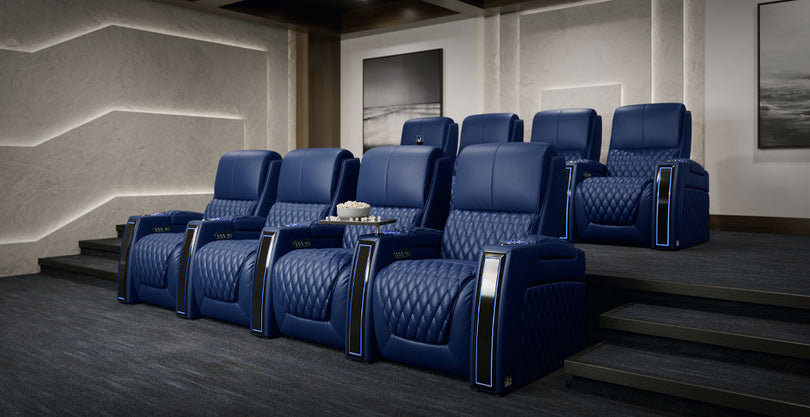
Building a dedicated entertainment room is a popular choice for modern homes. While many focus on 4K projectors and high-end surround sound, they often overlook the most important part: comfort. The family couch is fine for a quick TV show, but for a long movie, it often leaves you fighting for elbow room or lacking proper neck support. This is where luxury home theater seating comes in. Buying a premium setup turns a basic movie night into a real theater experience. True home theater luxury seating goes beyond standard living room couches. It combines comfort, great looks, and helpful technology. Here is why buying a luxury home theater seat is a smart choice for your home. What Defines Luxury Home Theater Seating? Media furniture varies a lot in quality. So, what separates an ordinary recliner from luxury home theater seats? The answer is better materials and smarter design. First, premium home theater seating uses high-quality materials like rich, top-grain leather and thick foam. These keep their shape and prevent that sinking feeling, even if you are tall. Plus, high-end models are built solidly to hold up to kids, pets, and daily use. They also come with advanced features like smooth power recliners, motorized lower back support, and armrests with deep storage. A few models feature center arms that flip up, letting you stretch out completely. All these little details add up, turning your room into the ultimate spot for cinema seating for home. Why You Need Luxury Theater Seating for Home Wondering if luxury theater seating for home is actually worth the money? A good chair does a lot more than just look nice in your room: Unbeatable Comfort If you are going to binge-watch a series, you need to be comfortable. Luxury seating is designed to support the natural curve of your body. Instead of sinking into an old couch and hurting your back, thick foam keeps your posture supported so you can watch back-to-back movies without feeling stiff. Premium Viewing Experience Getting a clear view of the screen is important. Premium recliner theater seats offer smooth, adjustable power recliners. With adjustable neck and lower back support, you stay lined up with the screen, making it easy to lean back and get a perfect view from the front row. Smart Features & Technology Modern home theater recliners with features come packed with useful extras. You get built-in USB ports to charge your phone and removable cup holders that are easy to clean. They also have adjustable LED base lights to help you see in the dark without distracting from the movie. Some people even add bass shakers to the seat frames so you can physically feel the sound! Great Looks Sleek leather home theater chairs also make your room look better. They give the space a real movie theater feel, turning a plain room into a high-end private theater. Why It Is a Worthwhile Investment When setting up your room, it is tempting to save money on cheap furniture. But choosing the best luxury home theater seating offers better value over time. Cheap seating wears out fast. Fake leather peels, basic cushions flatten, and manual parts break. Premium models, on the other hand, are built to last. A high-quality set can handle years of daily use and still look new. The real value comes from everyday comfort and having your own space. You don't have to fight for the best spot on the couch because every chair is a great seat. In the end, installing good media furniture improves your home and makes watching movies much more enjoyable. Choosing the Best Luxury Home Theater Seating Selecting the right seating requires a bit of planning. Keep these buying tips in mind: Room Size & Layout: Measure your space to find the best setup. Focus on your front row to get the best viewing angle. Material Preference: Choose between easy-to-clean top-grain leather or durable, cozy fabric. Features Needed: Make a list of must-haves, like heat and massage, powered headrests, or flip-up arms. Brand Reliability: Pick brands known for lasting a long time. If you want something reliable, the Seatcraft Signature Series is a solid choice. Built with high-end parts, Seatcraft Home Theater Seats give you the right blend of cozy support and cool tech to fit whatever room layout you have. Explore Luxury Home Theater Seating Options Ready to make your movie nights better? You don't have to stick with an ordinary couch when you can have real comfort and your own space at home. Whether you just need one recliner, a loveseat, or enough rows to fit the whole neighborhood, 4Seating has you covered. Take a look around our store to see all our Luxury Home Theater Seating. Check out our options today to find exactly what fits your space. Wrapping Up Getting a luxury home theater set really just comes down to prioritizing your own downtime. When you go with sturdy materials, designs that actually support your back, and smart tech features, you guarantee a top-tier movie night right in your living room. Upgrade your media room today and enjoy the comfort you deserve.
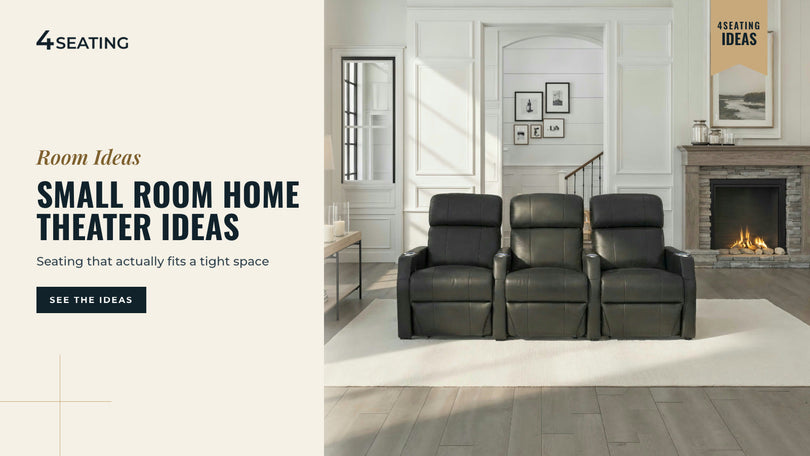
Small Room Home Theater Ideas: Seating That Actually Fits
Your room might be a spare bedroom, a corner of the basement, or one wall of a den that has to double as a theater. The couch that looked right on paper doesn't leave room to walk, and the recliner you liked in the showroom needs more wall behind it than you've got. If you're after small room home theater ideas, or just small theater room ideas that hold up once you pull out a tape measure, start with the seats, not the paint color. The best fit is a 2-seat wallhugger row, a loveseat, or a compact theater sofa, all built to recline fully in a tight footprint. Two-seat rows start around 62 inches wide, SpaceSaver rows shave off extra width with narrower armrests, and seats ship in sections so they usually pass through a standard door. Take three measurements before you shop, then choose between a row and a sofa and size a screen to a shallow room. Get those right and everything else, layout, screen size, décor, falls into place around them. Browse the full wallhugger and spacesaver home theater seating built for exactly this problem, then use the numbers below to match a configuration to your actual wall. Measure First: Wall Width and Recline Clearance Three numbers decide what fits: your wall width, how much width a SpaceSaver row saves you, and how much clearance a reclined seat needs behind it. Tape-measure the wall corner to corner, then subtract the walking room you need on each side of the row. A common guideline is at least 24" between pieces of furniture and 30-36" for main paths. Whatever's left is the width you're shopping for. Power recline models plug into a standard 110v wall outlet, and each seat may need its own; manual models don't plug in. Use this table to match that number to a configuration: Configuration Width range (product pages) Best for 2-seat straight row about 62-86" Spare bedrooms, dens, couples' theaters 3-seat straight row about 90-126" One dedicated wall in a media room 4-seat straight row about 117-164" Larger media rooms, family seating SpaceSaver row Narrower armrests trim the row; the Sienna Spacesaver row of 3 is 90", the narrowest of any row of 3 Any wall where every inch counts The width ranges are wide because the model, armrest style and options change the footprint, so shop within the range that's left on your wall instead of picking a chair and hoping. Here's how SpaceSaver gets that extra width back: the armrests are narrower on each seat, so the savings add up across the row. It's a bit like trading a chunky armchair for a slim one to squeeze in a third passenger. Wallhugger design handles the other dimension: clearance behind the seat. A wallhugger is a seat that needs only a few inches between its back and the wall when fully reclined. Across Seatcraft models it runs about 3" to 6.5": the Sienna needs 3", the Napa 5" and the Pantheon 6.5". Check the Specifications tab for each model's wall clearance, and the Dimensions tab for Full Recline, the distance from the wall when the seat is fully reclined. The takeaway: a SpaceSaver row saves you width, a wallhugger saves you depth behind it, and you need both numbers before you shop. Browse our Spacesaver and Wallhugger Home Theater Seating Small Theater Room Ideas: 2-Seat Rows, Loveseats and SpaceSaver Seats Pick by headcount and wall width, in that order. A 2-seat theater row suits two regular viewers, a loveseat suits two who'd rather sit shoulder to shoulder, and a single SpaceSaver recliner rounds out a row without eating extra clearance. A straight 2-seat row is the basic building block: two individually reclining seats, starting around 62 inches wide. A loveseat pairs the two seats with no console between them, so two people sit closer together, the tighter option when the room, or the relationship, calls for it. Either way, look for a wallhugger model, since that's what lets the row sit close to the back wall, and a SpaceSaver if width is tight too. The Sienna, one of our top sellers and part of 4Seating's SpaceSaver lineup, is a useful example of how this plays out. It needs 3" from the wall to fully recline, and the same seat configures as a 2-seat row, a 3-seat row with a loveseat position, or a sofa, so you know exactly what a wider version would look like if the room ever allows it. If you only need to fill one more spot on a side wall or a corner, a single SpaceSaver recliner does that without needing the clearance a regular recliner would. Treat it as adding a seat to the room's plan, not the plan itself; a theater built entirely from singles rarely uses the wall as efficiently as a row does. Start with a row or a loveseat sized to your wall, and treat a single recliner as an add-on, not the whole plan. Sofa or Theater Row in a Small Room? Choose a theater row for a dedicated, single-purpose room, and a theater sofa or sectional for a room that does double duty as a den, office or guest room. Both formats come in wallhugger designs; the difference is how the room reads the other six days of the week. A theater row, with individual recliners, a console and cupholders, is unmistakably a theater, and it's the default for most small dedicated rooms. A theater sofa or compact sectional keeps the recline and cupholders of a row, but in a shape that reads as ordinary living-room furniture, a better fit for small media room seating that can't look like a theater all week. The Seatcraft Republic is a wallhugger sofa built on that idea: its Specifications tab lists 6" from the wall for a full recline, so the sofa shape doesn't cost you all the space savings. Theater row Theater sofa / sectional Feel Reads as a dedicated theater Reads as living-room furniture Seating Individual recliners + console Connected seats, shared or split backs Best for A room used only for movies A multi-use den, bonus room or guest room Small-room fit 2-seat and 3-seat wallhugger rows Compact sectionals and 2-3 seat sofas Whichever format fits your room, check how the piece ships. Many theater seats and sofas arrive in sections with removable backs, so a row usually passes through a standard doorway, hallway or stairwell in individual pieces, then assembles in the room. Measure the path first. Let the room's other six days decide between a row and a sofa, not just movie night. Browse our Theater Sofas and Sectionals Screen Size and Seating Distance for Small Rooms A small room often suits a 55- to 65-inch TV or a short-throw projector, watched from close enough that the screen still fills your view without the seating wall crowding the picture. A common guideline is that the screen fills about 30 degrees (SMPTE) to 36-40 degrees (THX) of your horizontal view. For a 65-inch TV, which is about 57 inches wide, that works out to roughly 6.5 to 9 feet. Bigger screens push that distance out past what many small rooms have front-to-back. It's really a room-depth problem, like sitting too close in a movie theater: the picture is technically bigger, but your eyes work harder to take it all in. The deeper the room, the larger a screen you can comfortably run. Measure your room's depth first, then pick the screen size that fits that number, not the other way around. For the full distance chart by screen size, see our viewing-distance guide, which covers screens from 50 to 150 inches. If the room is too shallow for a comfortable front-row distance at all, that's usually a sign to size the screen down rather than push the seating closer than feels natural. A short-throw projector can help too, since it throws a large image from close to the screen wall instead of needing distance behind the seating. Light, Sound and Décor Tricks for Small Spaces Controlling light does more for a small home theater's feel than adding square footage ever could. A dark room reads as "home theater" at almost any size; a bright one reads as a spare bedroom with a TV in it. A short checklist covers most of it: Paint it dark. Deep, matte wall colors can cut screen reflections and make the room's edges disappear once the lights are down. Black out the windows. Daylight works against both picture quality and the movie-night feel, and it matters more in a small room, where one bright window dominates the space. Mount the screen. A wall-mounted TV or a short-throw projector frees every inch of floor for seating instead of a stand or cart. Dim the lights. Dimmable lamps or LED strips give you a usable glow before the movie and true darkness once it starts. Dress the room. A few pieces of home theater décor make a small room feel intentional instead of improvised. Sound is a separate project from seating. Speaker placement and room treatment are best planned with an AV professional, so treat this list as a starting point rather than a complete answer. Browse our Home Theater Décor Seating comes first, since it sets the floor plan, then light control, then decoration. That order works at any square footage. Where to Start: 4Seating's Top Small-Room Picks 4Seating's SpaceSaver and wallhugger lineup covers rows, loveseats and sofas across several brands, so there's usually a place to start. Sienna Italian Leather Spacesaver Home Theater Seating - one of our top sellers, 3" wall clearance, and it configures as a 2-seat row, a 3-seat row with a loveseat position, or a sofa. Napa Italian Leather Spacesaver Home Theater Seating - a SpaceSaver with 5" wall clearance, power recline and a power headrest, in rows of 2 to 5 plus loveseat and sofa layouts. Diamante FX Flip-Up Headrest Home Theater Seats - from the Diamante family of top sellers, 3" wall clearance and a flip-up headrest for a different look. Cavallo Monarch (By Seatcraft) Home Theater Seating, Fabric, Power Recline - a fabric power recliner with 3.5" wall clearance, sold in rows of 2, 3 and 4. Seatcraft Republic Sofa Italian Leather, Powered Headrest, Power Recline - a wallhugger sofa (6" wall clearance) that reads as ordinary living-room furniture. Even a compact row ships free anywhere in the continental US, and sample swatches are available for many upholstery options if you'd like to see the material first. For the full seating lineup, browse home theater seating. Start with the Sienna for a flexible row, or the Republic if the room needs to look like furniture the other six days of the week, and check the Specifications tab on any pick before you place it. For anything the product page doesn't cover, our customer help line is open during business hours at 1-800-407-8665. About this guide: 4Seating has been selling home theater seating since 1997, including the Spacesaver seats covered here.
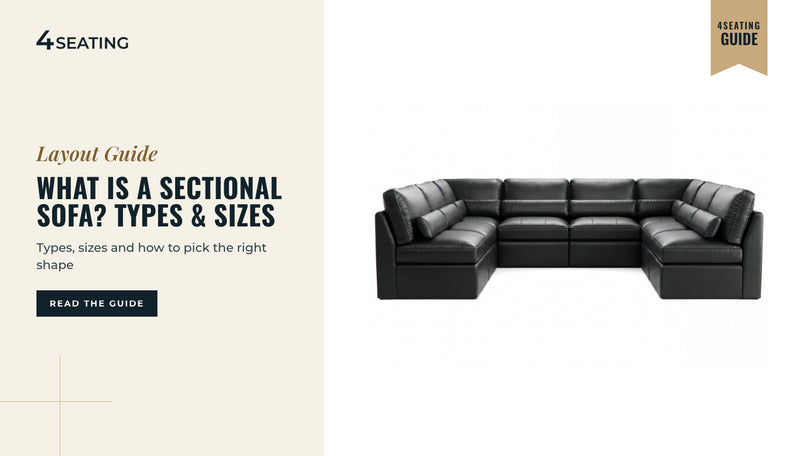
What Is a Sectional Sofa? Types, Sizes & Buying Guide
Does one sofa leave a corner of your living room, or the whole back wall of your media room, looking half empty? That's the gap a sectional is built to close. So what is a sectional sofa, exactly? It's built from multiple independent pieces, corner wedges, armless chairs and chaises (extended lounging seats), that lock together into one arrangement instead of sharing a single frame. Because the pieces separate, a sectional can usually travel through doorways and hallways a one-piece sofa can't. Here's how to tell an L-shape, a U-shape and a modular apart, how to read left-facing versus right-facing before you order, and how to measure your own room so the piece you pick fits. Browse 4Seating's full sofas and sectionals collection to see the shapes below in person. What Is a Sectional Sofa? A sectional sofa is a large seating unit made of multiple independent pieces, armless chairs, corner wedges, chaises, and consoles (a table section between seats), that connect into one continuous arrangement rather than sharing a single frame. That's also what separates it from an ordinary sofa or loveseat. A traditional sofa is a single fixed-width piece. A sectional is a set of pieces chosen to fit a specific room, corner, or media wall, and many also let you add a middle console, an ottoman, or a loveseat-style pairing at checkout. If you've seen it called a "sectional couch" instead, it's the same thing. "Sofa" and "couch" are interchangeable; "sectional" just tells you it's built from sections. Types of Sectional Sofas There are five main types of sectionals, and each one solves a different room problem. Type Layout Best for Real example L-Shaped A left-side seat, middle seats, a 90-degree corner seat and a right-side seat Corners, den-style rooms Wilshire L-Shaped Home Theater Modular Couch - 6-Piece or 7-Piece U-Shaped Three rows of seats around an open center Large groups, media rooms Seatcraft Heavenly Media Lounge U-Sectional - 6-Piece or 8-Piece Chaise Standard sofa plus one extended lounging arm Small-to-medium rooms that want a stretch-out spot Left- or right-facing chaise end Modular Independent pieces where the middle seats and the corner can be rearranged, while the left and right end seats stay at the ends Households that like to try a new layout now and then Look for "modular" in the product name, like the Wilshire and Diamante lines Reclining / power A sectional shape with power recline or consoles between seats Home theaters and dedicated media rooms See the multimedia sectionals collection, below A pit sectional is a U-shape arranged around a lounging area rather than upright seating. The Diamante Home Theater U Shaped Sectional Pit is one example, in 6-, 8- and 12-piece builds. For the U-shaped sectional layout specifically, 4Seating's U-shaped sectionals category narrows the catalog to that shape. How to Tell Left-Facing From Right-Facing In short: stand facing the sofa as you would from your TV. If the chaise is on your left, it's left-facing. On your right, it's right-facing. Try it before you order: stand where your screen will sit and look back at the empty spot for the sectional. Decide whether the chaise goes under your right hand or your left: whichever side keeps the open, armless end facing into the room, not a doorway or a walking path, is the one to buy. Left- and right-facing describe the chaise, not the sofa, so face your screen first and pick the side that keeps your traffic path clear. Sectional vs Modular vs Sofa These three terms get used loosely, but they're different. Feature Sofa Sectional Modular sectional Frame One fixed frame Several pieces joined into a set shape Independent pieces, with middle seats and corner you can swap around Reconfigurable No Mostly fixed, it comes in the arrangement you order Partly, usually only the middle seats and the corner Typical seats 2-3 4-8+, depending on piece count Set by the piece count you choose Best for Small rooms, formal layouts A dedicated, large lounging zone Rooms where you may want to change the middle of the layout A modular sectional is always a sectional, but a sectional isn't always modular. A fixed L-shaped or U-shaped sectional is sold as one set arrangement. A modular sectional gives you a little more room to play: the left and right end seats stay put, but you can usually rearrange the middle seats and the corner. Most sectionals come fixed the way they ship. If you like the idea of reshuffling the middle later, look for a modular one. If you've found the shape you want for good, a fixed sectional is simpler. Theater and Media-Room Sectionals A sectional built for a media room often adds features a living-room sofa skips, such as power recline and consoles between seats for drinks and snacks. The Diamante Modular Home Theater Sofa Console Table is one example: a fixed console between seats, built for this kind of setup. Because these pieces ship in sections, they usually move through doorways and hallways more easily than a one-piece theater sofa, which helps in a basement build or an ordinary living room alike (measure your narrowest turn first). A media-room sectional also differs from a row of separate recliners: one continuous seating line instead of individual chairs side by side. Browse our multimedia sectionals collection for the full range of power-recline and console builds. Sectional Sofa Sizes and How to Measure Sectional sofa dimensions start with row widths, since a sectional is two or more rows joined at an angle or corner. Home theater seating in a standard configuration runs about the following widths, and your exact model's page lists the width of each configuration. Row Approx. overall width 2-seat (loveseat) row about 62-86" 3-seat row about 90-126" 4-seat row about 117-164" For example, the Sienna Italian Leather Spacesaver Home Theater Seating row of 3 is 90", while the Solis w/ Straight Console row of 3 is 126". A sectional's full footprint, its widest point plus its depth, depends on the shape and piece count. You'll find it in each product's configuration options for the piece counts offered, so check it on the product page before you order. To measure for a sectional before you buy, grab a roll of painter's tape and mark out the full footprint on your floor, both rows of an L-shape or all three rows of a U-shape, not just one row's width. Leave it down for a day and walk the room as usual, so you can see if it blocks a doorway or sits too close to the TV. What to look for before you order: - The taped-out footprint fits with walking room to spare, not just the wall-to-wall width - Your narrowest doorway and hallway turn are wider than the largest single piece, since each piece is still one solid block - Whether you need left-facing or right-facing, decided before checkout - Wall clearance behind it, if it reclines. This is the gap you need between the back of the seat and the wall when fully reclined, and it varies by model: the Catalina FX Power Console Home Theater L Sectional needs 3" from the wall, while the Solis FX Flip-Up Headrest Home Theater L Sectional needs 5". Check the Specifications tab of the one you pick - The product page's own footprint, since it varies by model and piece count A sectional's row width rarely tells the whole story once you add the corner and the second row, which is why the floor test is worth a day. How to Choose the Right Sectional Start with the room, not the sofa. Measure the space and hallway turns first, then pick a shape, L, U, chaise, or modular, that fits how you'll actually sit: facing a screen, facing each other, or both. From there, three things narrow the choice fast: Material. Leather and fabric feel and clean differently. Each product's Specifications tab lists its Upholstery Material, and sample swatches are available for many upholstery options. Configuration. Most sectionals ship in a fixed arrangement. If you'd like a little flexibility, look for one where the middle seats and the corner can be rearranged later. Use case. A living-room sectional prioritizes face-each-other seating. A media-room sectional prioritizes facing the screen, with recline and consoles built in. See our guide to movie theater couches for more on that distinction. Settle fit first, then let material and use case decide which piece you order. Where to Start: 4Seating's Sectional Picks These three cover the range above. Wilshire L-Shaped Home Theater Modular Couch - the L-shape pick for a corner room, in 6-Piece or 7-Piece builds. Seatcraft Heavenly Media Lounge U-Sectional - the U-shape pick for a larger media room, in 6-Piece or 8-Piece builds. Diamante Modular Home Theater Sofa Console Table - a modular pick with a fixed console between seats, in rows of 2, 3 or 4. Browse our Sofas and Sectionals collection Browse our Multimedia Sectionals collection Browse our U-Shaped Sectionals collection Each product page's Dimensions tab and dimension diagram make it easier to match a shape and row count to your room, and sample swatches are available for many upholstery options. Whichever configuration you choose, shipping is free anywhere in the continental US. You can also browse the U-Shaped Sectionals collection and check each model's width on its Dimensions tab. Still deciding on a shape? Our customer help line can support you during business hours at 1-800-407-8665. About this guide: Since 1997, 4Seating has been selling home theater seating, including the sectionals covered here.
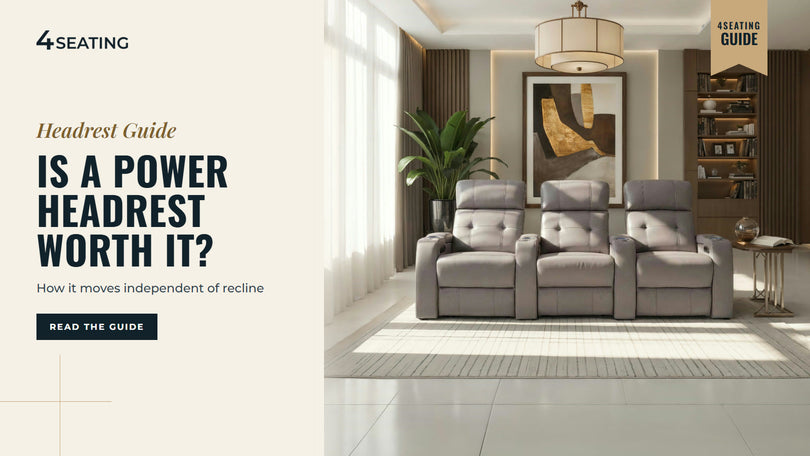
Is a Power Headrest Worth It? What It Does on a Theater Recliner
A power headrest recliner is built for the last stretch of a two-hour movie, when you're fully reclined and want your head and neck supported where you've settled, with the screen in your line of sight. One button brings the headrest to meet your head at whatever angle you've reclined to. Power headrests are built into 4Seating's power headrest theater seating across rows, loveseats, chaises and sofas, not just single chairs. If you recline to watch, an adjustable headrest recliner is worth having. If you mostly sit upright, a fixed headrest may do. Once you've seen how a power headrest actually moves and how it compares to a manual one, you'll know whether it's worth adding to your row. How a Power Headrest Recliner Works On a standard recliner, the headrest cushion is part of the seat back, so it stays at one angle relative to the backrest however far you recline. That suits a lot of upright sitting. If you recline deeply, you may want to fine-tune where your head rests. A power headrest adds that fine-tuning. It's designed to adjust separately from the recline, though the details depend on the model. Press the button and it comes forward to meet your head, wherever you've reclined to. Nudge it again a few minutes later without sitting up. Next time you're in a recliner, reach up and feel whether the headrest cushion is stitched flat into the backrest, or sits on its own separate cushion you can move. That's the whole difference between fixed and powered. A power headrest is one of several feature options across 4Seating's catalog, alongside power lumbar (a motorized pad that adjusts support at the lower back), heat and massage, and zero gravity recline. Two ways it's built: full cushion vs. flip-up Many power headrests use a full cushion that you raise, lower or tilt separately from the recline. Seatcraft calls its version ComfortView on some models. A second style, used on the Diamante FX Flip-Up Headrest seats, puts a flip-up headrest on a low-profile seat back. Both styles show up across recliners, loveseats, chaises and sofas, not just single seats, so you can choose a headrest style for a multi-seat row as well as one chair. A power headrest is the cushion that moves on its own, so it keeps meeting your head instead of drifting away from it. Powered vs. Manual: The Adjustable Headrest Recliner Compared A manual headrest is the simpler design. You reach up and push or pull the cushion into place by hand, and it can be harder to reach once you're reclined. Manual / fixed headrest Power headrest How you adjust it Push or pull the cushion into place by hand Press a button on the armrest Position while reclined Tilts back with the whole seat, so it drifts out of position as you recline Moves independently, so it can meet your head at any recline angle Fine-tuning Limited to the positions the cushion allows Adjusts through its range at the push of a button Reaching it once seated Means sitting up or reaching behind you No need to sit up Typical use case Occasional, upright viewing Long sessions, deep recline, shared rows with different heights Neither one is "better" in every room. A manual headrest keeps the seat simpler. A power headrest adds a motor and a control, which suits rows built for long viewing sessions. The control layout depends on the model, and the more power features a seat has, the more buttons it has. Manual works fine for occasional upright sitting, and power earns its keep once you start reclining flat. Who Notices the Difference Most Anyone who reclines flat, and anyone on the taller or shorter end of average height, is likely to notice a fixed headrest first. A fixed headrest is built for one general sitting height, so if you're taller or shorter than that average, the fit can be off. On a taller frame, a fixed headrest can sit lower on the back of the head or neck instead of behind it. On a shorter frame, the opposite can happen, especially once the seat reclines and the whole back, headrest included, tips further from where your head actually is. If you're outfitting a row for a mix of heights, our guide to the best recliners for tall people walks through frame and footrest sizing alongside the headrest question. Recline angle matters just as much as height. The further back a seat goes, the more a fixed headrest's position drifts from "behind your head" toward "behind your shoulders," which is exactly the gap a power headrest is built to close. If your seats mostly stay upright, say in a casual family room where guests sit forward to eat or talk, the difference is smaller and a fixed headrest may never bother anyone. If you're building a dedicated theater row where reclining flat for a two-hour movie is the whole point, it's worth prioritizing rather than adding later. In a shared row, the goal is for each viewer to set their own position without touching a neighbor's seat or waiting their turn. The control layout depends on the model, so check the product page and configuration options for the loveseat, sofa or row you're considering. The more you recline, and the further you are from average height, the more a power headrest earns its keep. Power Headrest Plus Zero Gravity and Power Lumbar Most of the zero gravity seats 4Seating lists include a power headrest with the recline. On those seats, the headrest can be adjusted to keep your eye line toward the screen when you're fully reclined. Browse our Zero Gravity Recline Home Theater Seats A power headrest and power lumbar solve two different problems in the same seat. The headrest tilts so the screen stays in view at your recline angle, and power lumbar shifts in and out at your lower back, independent of the headrest. Seats that pair both give you two separate adjustments instead of one, which matters most for longer sessions. Within 4Seating's power headrest theater seating, the power lumbar line overlaps with several power headrest models. The Luminis Zero Gravity with Heat & Massage, for one, lists a power headrest, power lumbar, heat, massage and zero gravity recline in the same seat. The models don't all stack the same features: the Diamante FX Flip-Up Headrest seats list a power headrest without power lumbar, so check the individual product page if you want both in the same seat. Browse our Power Lumbar Theater Seating Pair the headrest with zero gravity recline or power lumbar when you want more than one adjustment working for you at once. Choosing It in a Row, Loveseat or Sofa Power headrests aren't limited to single recliners. They show up across 2-, 3- and 4-seat rows, as well as loveseats and full sofas. Standard-configuration home theater rows run about 62-86" for 2 seats, 90-126" for 3 and 117-164" for 4, and the Diamante FX row of 3 (standard) is 110", so check the width of the configuration you choose on its product page. Browse our Power Headrest Sofas and Loveseats The Diamante FX and Haven Lounge list an easy-off backrest, which usually helps a seat through a doorway, though you should measure the path first. If your room is tight, start with a 2-seat row or a loveseat rather than skipping the feature altogether, and add a matching seat later. A power headrest means a power seat. The seats below list a Standard 110v Plug on their Specifications tabs, and each seat may need its own outlet. A licensed electrician can add one if the room needs it. Seatcraft seating carries a 1-year limited warranty, and the optional 5-Year Accident Protection Plan covers accidental stains and damage from delivery, and frames, springs, mechanisms and motors in years 2 to 5. A power headrest scales from a single seat to a full sofa, so room size doesn't rule it out. Where to Start: 4Seating's Top Power Headrest Picks Luminis Zero Gravity with Heat & Massage - the one to look at if you want every adjustment in a single seat: headrest, lumbar, heat, massage and zero gravity recline. Diamante CoolZero - one of our top sellers, with a power headrest in Italian leather. Diamante FX Flip-Up Headrest - the flip-up headrest style on a low-profile, diamond-stitched back. Monterey Chaise CoolZero - a chaise-style footrest (one long, padded leg rest) with a power headrest, for stretching out. Haven Lounge Chaise Sectional - a performance-fabric chaise sectional with power headrest and power lumbar, if you want a lounge look instead of a row. Check each model's Specifications tab on the product page if you're not sure which combination fits your room. Shipping on the seat you pick is free anywhere in the continental US. Questions left after all that? Our customer help line can help during business hours at 1-800-407-8665. About this guide: 4Seating has sold home theater seating since 1997, including the power headrest seats in this guide.
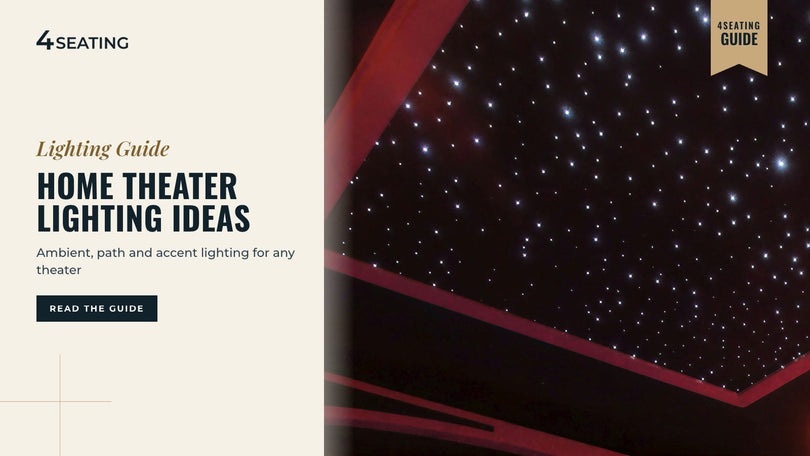
Home Theater Lighting Ideas: Sconces, Step Lights & Star Ceilings
The lights go down before a movie: a soft glow under the seats, a faint field of stars overhead, and just enough light along the steps that nobody stubs a toe on the way to the back row. That's good home theater lighting, and it comes from three layers, not one fixture. Most good home theater lighting ideas boil down to three layers: dim, warm ambient light for the room's base brightness, low path light along steps and aisles so people can see where they're going, and accent light (seat baselights, sconces, a star ceiling, bias light behind the screen) for mood. Get the first two layers right, then accent lighting is where the room gets its personality. This guide shows which layer to tackle first, which accent pieces are listed on 4Seating's product pages, and which parts of the job belong to a licensed electrician. 4Seating's home theater decor collection includes fiber-optic star panels, acoustic wall panels and riser platforms. Ambient and path lighting, and anything that touches your home's wiring, are separate projects to plan with a lighting professional and a licensed electrician. How to Layer Home Theater Lighting: Ambient, Path and Accent Think of the three layers as separate jobs, not separate rooms. Ambient light sets the base brightness you dim down right before the movie starts. Path light is functional: low, steady light that keeps steps and aisles visible once the ambient layer goes dark. Accent light is the decorative layer, and it's what makes the room look like a theater instead of a dark basement. Layer Job Typical fixtures When it's on Ambient Base room brightness Ceiling cans, wall wash, dimmable overheads Full during setup, dimmed to near-dark for the movie Path Visibility on steps and aisles LED strip along riser edges, low rope lights, floor pucks Low, once ambient dims Accent Mood and decor Seat baselights, sconces, star panel, screen bias light Dimmed for the movie, brighter between showings To find your path-lighting gap, stand at your main doorway with only the overhead lights on, then dim them. If you can't tell where the steps or aisle edges are, fix that before you touch the decorative layer. Ask your electrician about putting each layer on its own switch or dimmer. A "theater mode" that dims the ambient light while leaving path and accent lighting on is the easiest way to get a dark room that's still easy to walk around in. Fixtures and dimmers are a job for a licensed electrician. Seat Baselights and Cupholder Lights Some of 4Seating's home theater seating lists LED baselighting and LED cupholders on its Specifications tab: small, low-glow accents under the seat base and inside each cupholder that stay lit, dimmed, while the rest of the room goes dark. On those models, it's an accent layer that comes with the seat itself instead of something you add afterward. The Luminis Zero Gravity Home Theater Seating with Heat & Massage, our best-selling row (sold as the Luminis LT Plus), lists "Baselighting: Yes, 7-Color LED Lighting" and a 7-color LED cupholder. If you're building your room's lighting around this layer, that gives you seat-level accent light as part of the seat. Lighting features differ by model, so check each product page's Specifications tab before you plan the rest of the room around it. If you're starting from scratch, choosing a row with baselights listed on the spec means one less lighting layer to plan separately. Browse our Home Theater Decor Step and Riser Lighting Path lighting matters most at a level change. A riser is a raised platform that lifts a back row so everyone sees over the row in front, and its edge is an easy place to misjudge a step once the lights go down. That makes step and riser lighting a visibility layer first, decor second. A continuous LED strip along a riser's front edge, set low and dim, outlines the step clearly without throwing light up into the room. The SoundRight 14" Home Theater Riser Platform doesn't list lighting on its spec, so a strip is something you'd add separately; ask your electrician how to power it. Mount path lights low on the wall or along the step so they mark the edge without glaring toward the screen. Local code can set requirements for steps and lighting in some spaces, so check with your building department before you finalize a plan. The International Code Council publishes the International Building Code, but your jurisdiction decides which edition and amendments apply. 4Seating's home theater risers come in 7" and 14" heights. Browse our Home Theater Risers Sconces and Dimmers Wall sconces are a popular home theater lighting idea, and for good reason. Pointed down or sideways rather than out into the room, they add warm ambient light without putting a bare bulb in anyone's line of sight. Sconces are a lighting-fixture category of their own, so plan them alongside your electrician and any lighting professional you work with. Any new wiring for a sconce or a dimmer is electrical work, and that's a job for a licensed electrician, not a weekend project. A few placement basics carry across most rooms: Put sconces on their own dimmer, separate from any ceiling or can lighting, so you can bring them down to a warm glow during the movie and back up between showings. A common guideline is to mount sconces about 60 to 70 inches from the floor, around standing eye level (This Old House). Sit in your seats and check how the fixture looks from there before you commit, and choose one that directs light up or down rather than at the audience. Choose warm light. Color temperature is measured in kelvins (K), and lower numbers look warmer. For homes, about 2,700K (warm) to 3,000K (soft) is the usual range (U.S. Department of Energy), rather than a bright white that competes with the screen. Warm and low beats bright and direct in a room built for a screen. Two or three sconces spaced along a side wall, dimmed low, can give a room more atmosphere than a single bright fixture. Star Ceilings: Fiber-Optic Panels for a Starry-Sky Look A fiber-optic star ceiling is one of the most eye-catching lighting ideas for a home theater, and 4Seating lists one on its product pages: the SoundRight Fiber-Optic Star Panel. Fiber-optic means thin strands that carry light from a single source to many small points, which is what creates the "stars." The product page describes the panel as designed for easy installation, and it links installation and connection guides, so read those before you plan the ceiling. Check the page for the panel's size, colors and configuration options, and see the star panels collection for other styles. Anything that connects to your home's wiring is a job for a licensed electrician. Browse our Fiber-Optic Star Panels Bias Lighting Behind the Screen Bias lighting is a low, even strip of light placed behind the screen or TV, facing the wall rather than the room, so your eyes aren't jumping between a bright screen and a pitch-black surround. It's designed to soften the contrast between the screen and the wall without raising the room's overall brightness. Bias lighting kits are typically an LED-strip purchase from an electronics or lighting supplier. Keep the light dim and neutral to warm in color, and make sure it isn't visible past the screen's edges. The goal is a softer transition, not a second light source the audience notices. Ask your electrician before you plan how it's powered. Which Lighting Elements Are on 4Seating Product Pages, and Which You'll Plan Separately Lighting element On a 4Seating product page What you'll typically plan separately Seat baselights and cupholder lights Listed on the Specifications tab of some seating models, such as the Luminis Nothing extra for the seat itself Fiber-optic star ceiling SoundRight Fiber-Optic Star Panel Mounting and connection, with a licensed electrician where wiring is involved Riser edge / step lighting SoundRight risers (lighting isn't on the spec) LED strip lighting along the riser edge Sconces and dimmers Separate category Fixtures and dimmer switches, installed by a licensed electrician Bias lighting behind the screen Separate category An LED strip kit, powered as your electrician advises Anything that touches your home's wiring is a licensed electrician's job. Where to Start: 4Seating's Lighting-Ready Picks SoundRight Fiber-Optic Star Panel - a star ceiling panel with installation and connection guides on the product page. Luminis Zero Gravity Home Theater Seating with Heat & Massage - our best-selling row, with LED baselighting and LED cupholders on the spec. SoundRight 14" Home Theater Riser Platform - a 14" riser for a back row, with an optional riser step; add path lighting along its edge separately. Shipping covers the continental US, and the seats you add to the room ship free. Contact the team for sample swatches of the seating upholstery. If anything is still unclear, call our customer help line during business hours at 1-800-407-8665. About this guide: 4Seating has been selling home theater seating since 1997, including the LED-lit theater seats covered here.
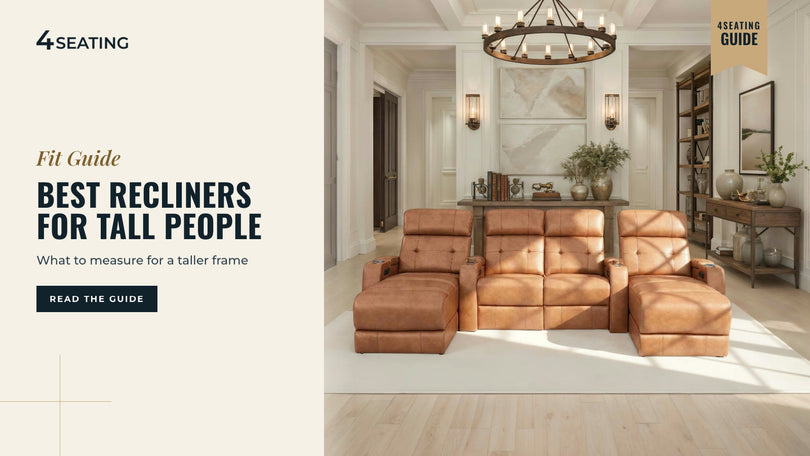
Best Recliners for Tall People: What to Measure Before You Buy
A recliner fits a tall person when the back reaches above your shoulders instead of stopping at your mid-back, the seat is deep enough that your knees clear the front edge, and the footrest extends far enough that your calves don't hang off the end. Power headrests and power lumbar (a motorized cushion that adjusts the support in your lower back) help fine-tune the last inch of fit, and Big & Tall models add a larger frame on top of all three. Start with the four measurements that matter, check them against your own body before you buy, then see which of 4Seating's Big & Tall seats to start with. If you're comparing our single theater recliners, here's what actually separates a good fit from a chair you'll be adjusting all movie night. What Makes a Recliner Fit a Tall Person Four measurements decide whether a recliner works for a taller frame: back height, seat depth, footrest length and headrest reach. Get any one of them wrong and the chair fights your body instead of supporting it. Back height matters most when reclined. A back that's tall enough reaches your head and shoulders through the full recline. A short one leaves your neck unsupported or forces you to slide down the seat to reach the headrest. Seat depth is the distance from the front edge to the backrest. Too shallow, and the front edge presses into the back of your knees before your shoulders reach the cushion. Footrest length is what keeps your heels from hanging off the end when your legs are fully extended. Headrest reach is how far the cushion moves to meet your head. A fixed headrest built for a shorter frame ends up behind your neck instead of under it. The numbers for each model are published on its product page, in the Dimensions and Specifications tabs, and they vary a lot from chair to chair. The Sienna, for example, lists a 42" overall height (the Dimensions tab labels it "Seat Height") and 39.5" upright depth, while the Big & Tall Pantheon lists 45" and 42.5". The true seat height, floor to the top of the cushion, is shown in each product's dimension diagram: 21" on the Sienna and 21.75" on the Pantheon, and standard theater rows run about 19" to 22". Footrest length varies the most from model to model. If you're between sizes, compare each model's footrest length on its Dimensions tab before you order. Back height, seat depth, footrest length and headrest reach, in that order, are what separate a good fit from a fight with the chair. How to Measure Yourself and Your Recliner Start with your own numbers, not the chair's marketing copy. Sit against a wall, measure from the floor to your shoulder and to the crease behind your knee, then compare those against the chair in a showroom or against the Dimensions tab if you're buying online. A chair's "fits most people" label means nothing until you measure your own body against it. What to check How to check it What it tells you Back height Sit against the chair's back. Note where your shoulders and head line up Whether the headrest needs to move up to meet you, or already does Seat depth Sit fully back. Check the gap between the front edge and the back of your knee Too little gap means the seat is too shallow for your leg length Footrest length (reclined) Recline fully. Check whether your heels extend past the footrest Hanging heels mean the footrest is undersized for your height Seat height (floor to cushion) Stand next to the seat cushion. Compare to your knee height A seat that's too low can push your knees up above hip level If you can't try the chair in person, compare the exact specs on each model's Dimensions and Specifications tabs before you order. To hold your measurements up against real numbers, here are four seats from the Dimensions and Specifications tabs, with seat height taken from each product's dimension diagram. Wall clearance is the gap a wallhugger needs behind it to recline fully. Model Seat height (floor to cushion) Overall height (listed as "Seat Height") Upright depth Full recline (from the wall) Wall clearance Weight capacity Sienna 21" 42" 39.5" 67" 3" 350 lbs per seat Grenada (standard single) 20" 42.5" 38" 68.5" 3" 350 lbs per seat Julius (Big & Tall) 21.75" 45" 41.5" 70" 5" 400 lbs per seat Pantheon (Big & Tall) 21.75" 45" 42.5" 72" 6.5" 400 lbs per seat A longer footrest isn't automatically a better fit for you, so measure from the crease behind your knee to your heel and compare. Full recline is how far the seat reaches from the wall when fully back, so keep a coffee table or walkway beyond it (the Pantheon reaches 72" from the wall). Measure your own body first, then hold those numbers up against the chair, not the other way around. Why a Power Headrest and Power Lumbar Help Taller Frames A power headrest and power lumbar don't change a chair's frame size, but they close the gap between close enough and actually fits for a taller viewer. Both let you fine-tune support after you sit down instead of settling for wherever the cushion happens to land. The reason this matters for tall frames is simple: a fixed headrest is built for one average body size. On a taller frame, it can sit behind the neck rather than under the head, especially once the seat reclines and the back tilts backward. A power headrest (Seatcraft calls it ComfortView on some models, including the Pantheon and Colosseum) lets you bring it forward to meet your head at whatever position you're reclined to. Power lumbar works the same way for your lower back, adjusting the support to your body instead of a generic midpoint. Not every model has them: the Sienna and Grenada single recliners above list no power headrest or power lumbar, so check the Specifications tab. Pair the two and a taller viewer and a shorter viewer sitting in the same row can each dial in their own support without swapping seats. Browse our Power Headrest Theater Seating Big & Tall Home Theater Seating: What Actually Changes A Big & Tall recliner isn't just a taller back added to a standard frame. The Pantheon, Julius, Octavius and Colosseum are sized up in overall height, depth and recline reach (see the table above), and each is listed at 400 lbs per seat. Our Big & Tall home theater seating collection centers on four models: the Pantheon and Julius, each available as a single recliner, a row of 2 to 5 seats, a loveseat or a sofa, and the Octavius and Colosseum, built as sofas and loveseats only. All four are power recline with a power headrest, and the Pantheon, Octavius and Colosseum add power lumbar too (the Julius doesn't). Seatcraft's Pantheon page recommends that model for people taller than 6'. Weight capacity is listed on each product's Specifications tab. The Pantheon, Julius, Octavius and Colosseum each list 400 lbs per seat. Browse our Big & Tall Home Theater Seating If you're planning a shared row rather than a single chair, the Julius Big & Tall row is available in rows of 2 through 5 seats, with loveseat and sofa configurations in the same model, so a family of different heights can sit in matching seats. For room planning, standard-configuration home theater rows run about 62-86" for a row of 2 and about 90-126" for a row of 3. The Pantheon row of 3 (standard) is 107" and the Julius row of 3 (standard) is 108", so check the width of the exact configuration you choose on its product page. Two practical notes. The four Big & Tall models list a Standard 110v Plug on their Specifications tabs, so plan an outlet near the row, and know that each seat may need its own (a licensed electrician can add one if the room needs it). And Seatcraft seating carries a 1-year limited warranty, with the optional 5-Year Accident Protection Plan covering accidental stains and damage from delivery, and frames, springs, mechanisms and motors in years 2 to 5. Tall-Friendly Picks: Rows, Loveseats and Sofas The strongest tall-friendly options are the ones you can size to your room: a row for a shared theater, a loveseat for two, or a sofa if you want fewer seams. A single recliner works well as an add-on seat once a row is already in place, or as a dedicated chair on its own. Model Formats available Why it suits a tall frame Julius Single, row of 2-5, loveseat, sofa Big & Tall frame with power headrest, 400 lbs per seat Pantheon Single, row of 2-5, loveseat, sofa Big & Tall frame with power headrest and power lumbar, recommended by Seatcraft for people over 6', 400 lbs per seat Seatcraft Octavius Sofa, loveseat Big & Tall sofa with power headrest, power lumbar and wireless charging pad, 400 lbs per seat Seatcraft Colosseum Sofa, loveseat Big & Tall sofa with power headrest and power lumbar, and a memory button for saved recline, headrest and lumbar positions, 400 lbs per seat The Seatcraft Octavius Big & Tall sofa is worth a look if you want the seam-free look of a sofa without giving up individual recline and headrest control per side. For more on choosing between formats, see our guide to picking the best Big & Tall sofas. Check each model's Dimensions tab to compare specs side by side. 4Seating ships its seats free anywhere in the continental US. You can also place your order by phone, and if you still have questions, our customer help line can help during business hours at 1-800-407-8665. About this guide: 4Seating has sold home theater seating since 1997, including the Big & Tall recliners in this guide.
Leather Types Explained: Top Grain vs Genuine vs Bonded vs Leather Gel for Theater Seating
Two rows can look nearly identical in a photo: the same stitching pattern, the same supple finish, a similar price. What sits under that surface can be very different, and it's what decides how the seat feels and wears. Bonded leather is a manufactured upholstery material made from shredded leather scraps mixed with a synthetic binder, applied to a fabric backing and embossed to look like a hide. It's the material furthest from a whole hide on the leather ladder, which is why it's worth knowing before you shop for home theater seating. Here's how to read a leather label (top grain, genuine, bonded, leather gel or faux) and spot which one a listing is actually offering. Leather isn't one material. It's a ladder of grades, and the label on a listing doesn't always tell you which rung you're buying. Below is a plain-language guide to each type: what it is, how it tends to behave in a theater room, and how to check what you're getting before you order. The Leather Ladder at a Glance Here's how the five materials you'll see on a listing compare, from a whole hide down to fully synthetic. Material What it is Real hide content Feel and wear Where you'll see it Full-grain / top-grain leather The outer or lightly sanded top layer of a hide, tanned and finished as one piece 100% hide Supple and breathable, develops a patina with age; generally the most durable of the group with basic care Premium seating and furniture Genuine leather A real layer of hide, often a lower or split layer coated to even out its finish 100% hide, lower grade Firmer and less breathable than top grain; benefits from conditioning Mid-range furniture, accessories Leather gel / leather match An engineered upholstery sold as a value material Not stated on the Specifications tab Consistent finish, easy to wipe clean Value-tier seating Bonded leather Shredded leather fiber and a synthetic binder on a fabric or paper backing, then embossed A portion of hide fiber; the share varies by manufacturer The surface layer can separate from the backing over time, which shows up as peeling and cracking Value furniture, book covers, belts Faux leather / PU leather Fully synthetic polyurethane or PVC with a leather-look texture 0% hide Easy to wipe clean, consistent color, but doesn't breathe or age like real leather Value furniture, outdoor-style pieces The further down the ladder a material sits, the less whole hide it contains, and the more its wear depends on a manufactured surface. What Is Bonded Leather, Exactly? Bonded leather starts as factory waste: the shavings and offcuts left over from cutting real hides. Manufacturers grind that waste into a pulp, mix it with a synthetic binder, and press the mixture onto a backing sheet stamped with a grain pattern. At a glance, it reads as leather. The weak point is the surface. Because the leather part is a thin layer bonded to a backing, it can separate with use. The surface can bubble, crack along fold lines like the seat bend or armrest edge, and peel away. It's also a labeling question. The FTC's Guides for Select Leather and Imitation Leather Products, which are voluntary, say sellers should disclose when a material is bonded or reconstituted leather rather than presenting it simply as "leather," and should disclose the percentage of leather fiber. You can read the text at eCFR (16 CFR Part 24) and Cornell Law School's Legal Information Institute. That's why it pays to read the material name on a listing closely: if it doesn't clearly say "top grain" or "genuine," ask before you assume it's a whole hide. Top Grain vs. Genuine Leather: What the Labels Actually Mean "Genuine leather" sounds like the top of the range, but it's a mid-tier grade, not a marketing superlative. Both top-grain and genuine leather are real hide, but they come from different layers and get different finishing: Top-grain leather uses the hide's outer layer, or a very light sanding of it, keeping most of its natural fiber structure intact. That's what gives it flexibility, breathability and the ability to soften and take on a patina as it's used. Genuine leather is still real hide, but it's often a lower or split layer, corrected and coated to hide imperfections and create a uniform surface. It's firmer and less breathable than top grain, and it benefits from regular conditioning. To compare them by touch, rub a thumb across the surface. Top grain typically feels a little softer and more supple, while a corrected, coated surface feels more uniform and firmer. In practical terms, top grain is the material to look for if you want a seat that ages gracefully, while genuine leather trades some of that suppleness for a lower price. Neither one is bonded leather, which sits a full rung below both. On 4Seating's product pages, the material name comes from the Specifications tab. The Grenada Italian Leather Home Theater Seating lists "Italian Leather" as its Upholstery Material, and the Luminis 365 Top Grain Leather Home Theater Seating lists "Top Grain Leather." The Italian Leather entry names the material but not a grade, so ask the team if the grade matters to you. Browse our Home Theater Seating Top grain and genuine are both real hide. The difference is which layer of the hide is used and how much finishing it needed to look even. Leather Gel and Leather Match: What They Are, and Where 4Seating Uses Them Leather gel, sometimes sold as "leather match," is an engineered upholstery designed to resemble leather at a value price. It isn't a hide grade, and it's not top-grain or genuine leather. How it wears depends on the specific formulation a manufacturer uses. In 4Seating's catalog, leather gel is the named material on value-focused rows like the 12006 Leather Gel Spacesaver Home Theater Seating and the Dynasty Leather Gel Home Theater Seating, both of which list "Leather Gel" as their Upholstery Material on the Specifications tab. The tab names the material, though not its exact composition. If a hide-based material matters more to you than price, look for models whose Specifications tab lists a leather upholstery, such as the Grenada (Italian Leather) or the Luminis 365 (Top Grain Leather). How Each Material Ages in a Theater Room A home theater seat gets a different kind of wear than a living-room sofa. The same few contact points, the headrest, armrests and the seat bend at full recline, flex and take body oils over and over, often in a room that runs warmer and darker than the rest of the house. Top-grain and genuine leather are real hide fiber, so they flex without a coating separating from a backing. Leather gel and faux leather wipe down easily, but how they age depends on the manufactured surface. Bonded leather tends to be the most vulnerable at the recline fold and along seams, since that's where its surface flexes hardest. Direct sun and heat vents can dry out and fade many upholstery materials, so keeping seating out of direct window light and away from heat sources helps protect the finish. For care, follow the manufacturer's guidance on our materials page. Where to Start: Check the Material Before You Choose a Row Photos and product copy can only tell you so much about how a material feels. Before you commit to a row, do two things: Request material samples. Sample swatches are available for many upholstery options, so you can compare the texture, thickness and finish of a leather against leather gel or performance fabric before you buy, not just a photo of it. Contact the team to request them. Check the Upholstery Material line. "Leather," "genuine leather" and "leather gel" aren't interchangeable. The Specifications tab names the material for each model, so check it before you buy. Browse our Sofas and Sectionals For the wider buying picture, see the complete guide to buying home theater seating online. If you're weighing whether to spend more on a higher grade at all, why luxury home theater seating is worth the investment walks through that trade-off. If you're comparing materials and still have a question, our customer help line is open during business hours at 1-800-407-8665. About this guide: Since 1997, 4Seating has been selling home theater seating, including the leather seats covered here.