Browse more articles
Home Theater Seating Layout: Rows, Curves, Aisles & How Many Seats Fit
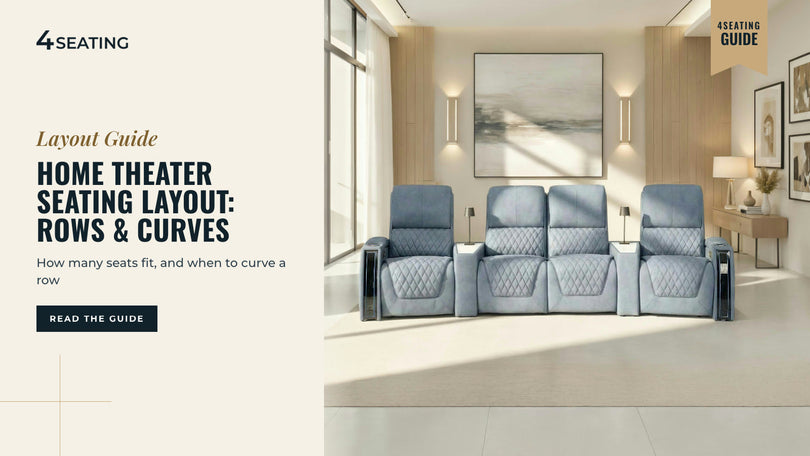
Start with the wall, not the chairs. Most home theater seating layout headaches begin there: a row that looks right online but doesn't fit the wall, or a walkway that gets too tight once the seats are reclined. Measure your wall, leave a few inches for trim and clearance, and match what's left to a real row size. 4Seating's home theater seating rows run about 62-86" for 2 seats, 90-126" for 3, 117-164" for 4 and 145-178" for 5, depending on the model and configuration. Get the wall measurement right and the rest of the plan falls into place: how many seats it fits, when a curved layout beats a straight one, and how to plan the space in front of the row. How Many Seats Fit in Your Home Theater? Start with your wall width, not the room's square footage. A wide room with a low ceiling still only seats what that one wall allows. Grab a tape measure and run it along the wall where the row will sit. That number decides your seat count, so write it down before you read any further. Row size Width range (product pages) Typical use 2-seat row about 62-86" Small rooms, a loveseat pairing, or a second row on a riser (a raised platform) 3-seat row about 90-126" A common single-row layout for a 12-15 ft wall 4-seat row about 117-164" Wider rooms, or a family-sized front row 5-seat row about 145-178" Wide walls, or a single row that seats the whole family The spread in each range comes down to the model and the options you choose. The Sienna Spacesaver row of 3 is 90" and the Solis with straight console row of 3 is 126", for example. A loveseat pairing (two seats sharing one back cushion, with no console between them) shortens a row: a Luminis row of 4 is 128.5" in the standard layout and 115.5" with dual loveseats. Once you've picked a model, subtract its exact width from your wall measurement. The product page lists the width of each configuration you can select, and it changes with the loveseat and console choices you make. Measure the wall first, then confirm your count against the real row width on the product page before you order. Straight Rows vs. Curved Theater Seating A straight row is simpler to plan and sits flush against a flat back wall. A curved, or angled, arrangement turns the outer seats slightly toward the screen, which can help sightlines in a wider room or one with a large projector screen. A curved row comes from wedge consoles. A wedge console sits between two seats and angles them toward each other, so the row bends instead of running flat. The more wedge consoles you add, the more curve you get, which is why a row of 4 curves more than a row of 3. Apex wedge console seating is a good example, and it's the style shown on this guide's cover. Wedge consoles come on many rows, so check the configuration options on the product page and match the row size to the curve you want. If your room is roughly square, go straight. If it's noticeably wider than it is deep, curved row theater seating earns its keep. Straight rows work best when: - The back wall is flat and the screen is centered on it - You're stacking a second row behind on a riser - You want the simplest install Curved (angled) layouts work best when: - The room is unusually wide relative to screen distance - Outer seats would otherwise face the screen at a sharp angle - You have the floor space for the extra depth a curve takes, without blocking the walkway Start straight unless your room's width gives the outer seats a bad angle on the screen. Aisles and Walkways: Side Aisle or Center Aisle? A side aisle keeps the row intact and is easier to fit in a narrow room. A center aisle splits the row, usually into two 2-seat sections, and makes it easier to reach a middle seat without climbing past reclined footrests. For everyday walking room, a common guideline for furniture layouts is about 30-36" of clear width for main paths and at least 24" between pieces of furniture. Test it with the real thing: recline a chair fully, then have someone walk the planned path. If they have to turn sideways or step over a footrest, it's too narrow. Required aisle widths and exits are a separate question. They fall under building code, so check local code with your building department (many areas build on the International Building Code). A reclined seat reaches well out into the walkway, so measure with the row reclined, not just closed. Each product page's Dimensions tab lists Full Recline, the distance from the wall when the seat is fully reclined, so keep your path beyond that number. Plan your home theater seating aisle width with the row reclined, or the number you planned for won't hold up on movie night. One Row, Two Rows, or a Riser? A single row works for most family rooms and small dedicated theaters. Add a second row only once you've solved the sightline problem, either with a riser or with taller BACKROW seating. Once you want a second row, a platform riser lifts the back row so sightlines clear the heads in front. The SoundRight 14" platform comes in 7" and 14" heights, in 50", 60" and 68" widths at 70" deep, to match your row width and ceiling height. Browse our Home Theater Risers If you'd rather skip the platform build, a BACKROW row sits taller than a standard row on its own, about 6 to 8.5" taller than a standard front row of the same model, depending on the model. Check your front row's height, because the gap varies. That lets a second row go directly on the floor behind the front row, no platform needed. Want even more clearance? Pair your BACKROW row with FRONTROW seats up front. FRONTROW seats sit lower than standard seats, which opens up the sightline for the row behind. They may be missing a few features that the standard version has, so compare the two product pages. Browse our Back Row Seating Option Best for Note Single row Most rooms, simplest setup No sightline planning needed Riser + standard row Dedicated theaters, bigger height gain Confirm ceiling clearance first BACKROW (no riser) Smaller height gap, no platform build About 6 to 8.5" taller than a standard row of the same model, depending on the model; still measure recline clearance behind it BACKROW + FRONTROW A bit more clearance, no platform build FRONTROW seats sit lower, but may lack some features For the full platform-building math, see 4Seating's guide, The Complete Home Theater Riser Guide. Planning the whole room around the seating? Start with our guide to building a home theater. If you remember one thing: a second row is a sightline decision first, and a floor-space decision second. Layout Examples: 12×15, 14×20 and 18×24 Ft Rooms These are planning examples, not universal specs; confirm with your own tape measure and the row's product page. Room (width × length) Usable wall width* What typically fits 12 × 15 ft ~138" A 3-seat row (about 90-126") with room on the sides, or a 4-seat row if you pick a narrower model (a Luminis row of 4 is 128.5") 14 × 20 ft ~162" A 4-seat row (about 117-164") on most models; the 20 ft length also leaves room for a riser behind 18 × 24 ft ~210" Two rows, e.g. a 3-seat front row (about 90-126") plus a 4-seat back row (about 117-164") on a riser, or one wide 5-seat row (about 145-178") *Usable wall width is the room width (12, 14 or 18 ft, converted to inches) minus a planning assumption of about 6" total for walls and trim. It's a starting estimate, not a measured spec, so check it against your own tape measure. Match the usable width column to a real row size before you fall for a layout photo online. Loveseat and Console Configurations Beyond a plain row of individual recliners, several 4Seating rows offer loveseat pairings (two seats sharing one back cushion, no center console) and fold-down console options, two home theater seating configurations that change the row's total width within the ranges above. A loveseat pairing fits the same number of people on a shorter wall than an all-individual-seat row, which makes it often the easiest way to add a seat without adding wall space. Console choices change the width too, so check the exact figure if you're planning close to your wall's maximum. If your row is going into a finished basement rather than a dedicated theater room, basement ceiling height and bar placement change some of this math too. See our basement home theater ideas guide for the basement-specific version. Where to Start: 4Seating's Layout-Ready Picks Once you know your wall width and row count, these are good starting points. Luminis Zero Gravity Home Theater Seating with Heat & Massage - a solid default for a single straight front row, available in 2 to 5 seats and our best-selling row. Apex CoolZero Wedge Console Italian Leather Home Theater Seats - wedge consoles bend the row toward the screen, so it's the pick for a wide room that needs a curve. SoundRight 14'' Home Theater Riser Platform - 7" and 14" heights, 50", 60" and 68" widths, for stacking a second row behind without guesswork. Grenada Italian Leather BACKROW Theater Seating - about 6.5" taller than the standard Grenada row, so it skips the platform build when you don't have the floor depth for one. The exact gap depends on your front row, so check your front row's height. Grenada Italian Leather FRONTROW Theater Seating - sits lower than a standard seat, which adds sightline clearance for the row behind. Shipping costs nothing on 4Seating seats anywhere in the continental US, and sample swatches are available for many upholstery options. Still have a question the product page doesn't answer? Our customer help line is available during business hours at 1-800-407-8665. About this guide: 4Seating has been selling home theater seating since 1997, including the straight and curved rows covered here.

Home Theater Seating That Feels Just Right: Comfort, Style & Setup Tips
Comfort isn’t just a bonus when it comes to setting up a home theater. It’s the whole point. You’re not just tossing a few chairs in a room and calling it a day; you’re creating a space where you can fully relax and enjoy what’s on screen without distractions. The right home theater seating brings everything together: comfort, sound quality, aesthetics, and yes, that little touch of luxury. You might already have the screen and speakers sorted. But if your back starts aching halfway through a movie or your guests are shifting uncomfortably in stiff chairs, the experience just doesn’t hit the same. That’s why it pays to choose seats that actually support long viewing sessions while adding to the atmosphere. Key Features of High-Performance Home Theater Seats There’s more to home theater seating than meets the eye. The best chairs are built to give you both comfort and control. Look for options with: Reclining backs and adjustable headrests Built-in lumbar support Wide armrests Deep cushioning that holds up over time These small upgrades can make a huge difference during longer marathons. Whether it’s a movie night with the kids or a solo binge session, your chair should help you settle in and stay relaxed. Materials and Upholstery Options: Leather vs. Fabric Now let’s talk about what your seating feels like. Leather gives you a sleek, classic look. It’s easy to wipe clean, resists spills, and holds up well if you're after a polished setup. But it can feel a bit cold when you first sit down. Fabric seats, on the other hand, are all about softness and warmth. They’re cozy and often available in a variety of textures and colors. The trade-off? You’ll have to be a little more mindful of stains. Choosing between them depends on what matters most to you: ease of maintenance or a softer feel. Either way, make sure your home theater seating is as practical as it is good-looking. Reclining Mechanisms: Manual vs. Power Recline Some people love the simplicity of a manual recliner. You lean back, the chair moves with you, and that’s that. Others prefer a power recline feature. With a button press, you can adjust the chair exactly how you want it, which is great if you want to fine-tune your position without fidgeting. A lot of cinema home theater seating options come with motorized controls that let you change the angle of your seat, raise your legs, or move the headrest for better neck support. It’s one of those features you won’t want to live without once you’ve tried it. Built-In Features to Enhance Your Movie Experience There’s no rule saying your media room seating has to be basic. Many chairs now come with extras that genuinely improve your setup: Cupholders USB charging ports Swivel tray tables for snacks Ambient base lighting Bass shakers that let you feel every explosion or engine roar These aren’t just gimmicks. They turn your media room chairs into fully immersive seats that work with your setup, not against it. Choosing the Right Configuration for Your Space Every home is different. Some people want just a few chairs lined up neatly. Others want rows of seating like a real theater. When you’re picking your layout, think about how you’ll use the space. Curved rows offer better sightlines if you have a wide screen. Straight rows save room. Risers help everyone see clearly. You can even mix in a loveseat or comfy home theater sofa for family movie nights. If your space is more of a multi-use area, a media room sofa setup gives you flexibility. It’s casual, but still theater-worthy. Home Theater Seating for Every Budget You don’t need to spend a fortune to get great seating. There are solid entry-level chairs with basic reclining features that are still super comfortable. Mid-range options often come with a few upgrades, like better materials or motorized reclining. Luxury models include full customization, extra support, and all the built-in bells and whistles. Whether you’re designing a modest home entertainment room design or a full-on furniture media room makeover, you can find something that fits. Optimizing Comfort and Ergonomics for Long Viewing Sessions Nobody wants a sore back after watching their favorite movie. That’s why ergonomic support matters. Look for chairs that follow your spine’s natural shape and keep your neck from straining. Seats with adjustable lumbar support and wide footrests help with blood flow and reduce pressure on your joints. And if you’re planning to host or binge-watch regularly, having that kind of support will make a big difference. Tips to Stay Comfy Through Every Scene Even the best home theater seating could use a few small upgrades to keep things extra cozy. Here are a few low-effort tricks that go a long way during those longer watch sessions: Add a little back support. Some seats have great lumbar support, but if yours doesn’t, a small pillow can seriously help your lower back relax. Think about your neck. A good headrest should support your neck, not push your head forward. If you’re constantly adjusting, it might be worth swapping out or adding a neck pillow. Go easy on the recline. Fully kicking back feels amazing, but you might find a slight recline more comfortable for longer movies. It keeps your body relaxed but still focused. Keep a blanket nearby. Sometimes it’s not about the temperature but a bit about feeling snug. A soft throw can make your home theater seating feel extra homey. Snacks and drinks matter. Staying hydrated and having a few favorite munchies close by makes the whole experience better. Cupholders and side tables definitely pull their weight here. Take a quick stretch. If you’re settling in for a full season binge, give yourself a break between episodes. Just standing up for a minute helps your body reset. Design Tips: Matching Your Theater Chairs to Room Decor Your home theater seating shouldn’t feel like it’s plopped down with no thought. You want it to blend with your walls, flooring, and lighting. Look for colors and materials that match your space, whether it’s sleek black leather for a minimalist setup or soft fabric in a warm tone for a cozy feel. You can also add some personality. Throw blankets, low lighting, and wall art. It all helps tie the room together and makes your entertainment room furniture look like it belongs. Installation Tips and Room Layout Ideas Once you’ve chosen your chairs, it’s time to get the setup right. Make sure each seat has a clear view of the screen. If you’re adding multiple rows, risers are your best friend. They lift the back row so nobody’s view is blocked. Leave enough space between rows so people can move easily. And don’t forget to plan around things like speaker placement and outlet access. A good setup is one you don’t have to keep adjusting every time guests come over. Why It’s Worth Investing in Quality Home Theater Seating It’s tempting to just grab a couch from another room and call it a day. But real home movie theater seating ideas go beyond that. They’re built for hours of comfort, better viewing angles, and features that keep you coming back for more. Whether you're going for the best home cinema seating or just something simple and functional, investing in the right furniture changes everything. It marks the difference between a room that looks the part and one that actually delivers. Final Thoughts: Make Every Movie Night Memorable A great movie setup is more than a big screen and booming speakers. It's about how you feel while you're watching. Comfortable, supported, and completely into the experience. When your home theater seating gets that right, the rest just falls into place. So take your time choosing, and build a space that makes movie nights the best part of your week. FAQs 1. What makes a good home theater seat? A good home theater seat should feel like one less thing to think about. It’s comfy, supports your back, and lets you settle in without fidgeting. If it reclines, holds your drink, and doesn’t make weird noises, that’s a win! 2. Is leather or fabric better for home theater seating? It depends on what you’re after. Leather looks sharp and wipes clean fast. Fabric feels a bit cozier and doesn’t get too hot. There’s no “right” answer, just what works best for you and your home theater vibe. 3. How much room do I need for home theater seating? Give yourself a little breathing room. You’ll want about 3 feet between rows if you’re adding more than one. Each seat takes up space when reclined, so a bit of planning helps everything fit comfortably. 4. What features should I look for in a home theater recliner? Go for what makes movie nights better. Things like cupholders, power recline, USB charging, or even lighting around the base. Some even come with bass shakers. Fancy? Yes. But are they worth it? Absolutely. 5. Can I change the layout of my home theater seating? Totally. Most setups are flexible. You can line up rows, mix in loveseats, or raise the back row for better views. The seats should fit your space and how you like to watch.
12 Home Theater Seating Ideas for Every Space & Budget
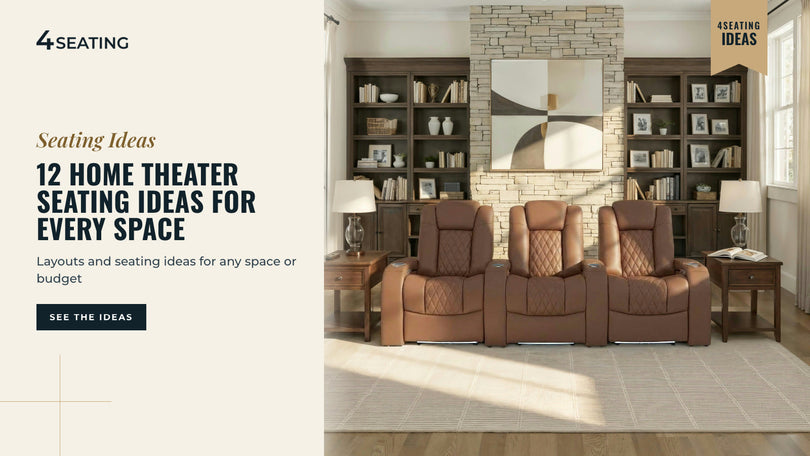
A home theater seating idea only works if it fits the room you actually have, not the catalog page. A wallhugger loveseat suits a small apartment den. A curved leather row suits a dedicated theater built to host a crowd. A reclining sectional suits a family media room that has to double as a hangout space most days of the week. Below are 12 home theater seating ideas and home movie theater seating ideas, each tied to a real room type, a real budget, and a real 4Seating collection. How wide is the wall you're facing seating toward, and who's usually on the couch with you? Keep those two answers in mind as you browse the full range of home theater seating to compare rows, sofas, and feature levels side by side. 1. Small Home Theater Seating Ideas: Wallhugger Loveseats and SpaceSaver Recliners Got a spare bedroom or an apartment corner, with a TV on one wall and only a few inches to spare behind the seating? That's the room a loveseat or a compact, wall-hugging recliner was built for, the starting point for most small home theater seating ideas. A loveseat skips the center armrest, so two people sit closer without losing a seat to furniture in between. Two terms help here. A wallhugger is a seat that needs very little space between its back and the wall when fully reclined. A SpaceSaver has narrower armrests, which trims the width of the whole row. The Sienna Italian Leather Spacesaver Home Theater Seating is both: it needs 3" from the wall to fully recline. Measure the wall and doorway width before you order. This suits a studio, a den, a bonus room, or anyone whose "theater" is really a corner of a shared space. See our guide on small-room home theater ideas for layouts and seat counts. In a room this size, the depth behind the seat matters more than floor space. 2. First Home Theater on a Starter Budget: Affordable Rows The first row you bring into a house is usually simple: plain upholstery, a straightforward recline, a cupholder for the popcorn. That's already enough to make a spare room feel like a real theater, without a fully loaded model's price tag. Pick the features that matter most to you and leave the rest for the next row. This suits a first dedicated row, or a guest room doubling as a media room. Heat, massage, and power headrests can wait. 3. Dedicated Theater Room: Premium Leather Recliner Rows If your room holds nothing but the screen and the row, with no coffee table to work around and nothing competing with the screen, that's where full-feature rows earn their keep: Italian leather upholstery, power recline, adjustable power headrests that tilt at the touch of a button, power lumbar (an adjustable lower backrest cushion), and USB charging, depending on the model. This suits a household committed to the room staying a theater, not doubling as a playroom or office, so load up every feature here; nothing else in the room competes for that budget. 4. Modern Media Room: Sleek, Low-Profile Seating If your media room opens straight into the kitchen and is visible the moment guests walk in, a classic recliner's tall headrest and exposed hardware can look out of place. Look for a slimmer profile, cleaner lines, neutral hues, and low headrests instead, so it reads as furniture first and theater seating second. This suits an open-concept, contemporary home where the "theater" has to look like it belongs with the rest of the house. In a visible room, the seat's profile matters as much as its recline. 5. Movie Marathons and Long Gaming Sessions: Zero-Gravity Recline Three episodes into a weekend binge, or hour four of a gaming session, you've stopped noticing you're sitting at all. Zero-gravity recline is made for those evenings: one button lifts your legs and eases the back down into a deep lounge position you can settle into for hours. Our Luminis Zero Gravity Home Theater Seating with Heat & Massage, our best-selling row, pairs zero-gravity recline with heat and massage. This suits anyone who holds one position for hours rather than shifting around. See our guide to zero-gravity home theater recliners for the full picture. If you measure movie nights in hours, not minutes, zero-gravity recline is the feature to look at first. 6. Curved Theater Seating Ideas for Wide Rooms and Big Gatherings In a wide room, the end seats of a straight row end up pointing toward the side wall instead of the screen. A curved row, built with wedge-shaped consoles between seats, angles the outer seats toward the center. This suits a room built to host game day or a full house on movie night, where nobody should end up in the "bad seat." If your room is wider than it is deep, a curved row keeps the outer seats pointed at the screen. 7. Media Room Seating Ideas: Reclining Sofas and Sectionals for the Family Room Tuesday afternoon, the room is couch-style togetherness; on movie night, it's individual recline and cupholders. A reclining sofa or sectional does exactly that, and L-shaped or U-shaped, modular layouts fill an odd-shaped room and rearrange as your family's needs change. This suits a household where the "theater" never stops being the living room, kids, pets, and all. Browse sofas and sectionals built with theater features like power recline. Browse our Sofas and Sectionals A sectional lets one room be the family room and the theater, without forcing a choice between them. 8. Cozy Den or Date-Night Room: Loveseats Without a Center Console Sharing a blanket with nothing between you but armrest? A loveseat is two seats with no console in the middle, the natural pick for a couple, or a parent and a kid, with a recline on each side. This suits a smaller den or reading nook, anywhere the point is sitting together, so skip the console when closeness matters more than a spot for a drink between you. 9. Casual Streaming Lounge: Chaise-Style Lounge Recliners A chaise-style recliner works like an ottoman you never have to drag over, because the footrest is already built into the chair. With an extended footrest, these recliners read as relaxed rather than formal, suiting a casual streaming setup or a reading nook that doubles as a screen room. A chaise recliner fits a room built around comfort first, structure second. 10. Winter Movie Nights: Heat and Massage Seating Cold night, you come in and settle into a seat that's already warm. Heat and massage turns an ordinary movie night into a small event, warmth and a massage cycle layered onto full power recline. This suits a room that gets heavy use in cold months, or anyone who wants the seat to do a little more than recline. Heat and massage pay off fastest in a room you actually use through winter. 11. Two-Row or Stadium-Style Theaters: Elevated Back Row Seating The goal in a second row is simple: everyone still sees the whole screen, not the back of the head in front of them. A construction riser platform is the traditional fix, and SoundRight risers come in 7" and 14" heights. BACKROW seating skips the platform: the seats sit taller themselves, about 6 to 8.5" taller than a standard row of the same model, depending on the model, so the second row gets a clear sightline on a flat floor. Want more clearance still? Pair BACKROW with FRONTROW seats up front. They sit lower than standard seats, though they may lack some features. This suits a dedicated theater adding a second row without a construction project. Browse back row seating if a platform build isn't on your list. Browse our Back Row Seating A taller seat and a taller platform solve the same sightline problem, so pick whichever one your ceiling and budget allow. 12. Taller or Larger-Framed Viewers: Big and Tall Seating If you've ever settled into a recliner only to find the headrest hits your shoulders, not your head, you know the problem. Many regular-size recliners can crowd a taller frame before the recline even maxes out, so Big & Tall seating is simply taller and roomier. The Pantheon Italian Leather Big & Tall Home Theater Seating is rated to 400 lbs per seat. This suits any household with a taller or larger-framed family member who's been making do with a seat that doesn't quite fit. Browse the Big & Tall seating collection, or see our best recliners for tall people guide for model-by-model picks. Fit the seat to your tallest regular viewer, not the average one. How Much Space Do You Need Behind a Reclining Seat? Good theater seating layout ideas start with two measurements: wall width, then depth behind the seat. Recliners need room to swing the footrest out. Wallhugger models need much less between the seat back and the wall: about 3" to 6.5" across Seatcraft models, such as the Sienna at 3", the Napa at 5" and the Pantheon at 6.5". Open the Specifications tab on any model you like for its number. The Dimensions tab lists Full Recline, the distance from the wall when the seat is fully reclined, so keep tables and walkways beyond it. Home theater seating rows run about 62-86 inches wide for 2 seats, 90-126 inches for 3, 117-164 inches for 4 and 145-178 inches for 5, so match the row size to your wall. A common guideline is to leave at least 24 inches between furniture and 30-36 inches for main walkways. Power recline models plug into a standard 110v wall outlet, and each seat may need its own, while manual models don't plug in. Row size Width range Ideas that fit best 2-seat row about 62-86" Wallhugger loveseats (idea 1), date-night loveseats (idea 8) 3-seat row about 90-126" Starter rows (idea 2), full-feature rows (idea 3), curved rows (idea 6) 4-seat row about 117-164" Two-row back row layouts (idea 11), Big & Tall rows (idea 12) Sofa or sectional varies by layout Family media room (idea 7), casual lounge (idea 9) The idea numbers match the section headings above, not a ranking. You don't need to get every number perfect, just these two: your wall width and the depth behind the seat. Picking by Room and Budget Tier Think in feature tiers rather than price tags; each tier spans multiple upholstery colors and row sizes. Entry tier: manual or power recline (motor setup varies by model), cupholders, leather-gel or fabric upholstery. Good for a first theater or a guest room doubling as a media room. Mid tier: power recline, power headrest or power lumbar (not always both), USB charging. Good for regular weekly use. Full-feature tier: power recline with power headrest and lumbar together, heat and massage, zero-gravity recline, or both together. Good for a dedicated, frequently used theater. Browse our Home Theater Seating Pick a tier based on how often the room gets used, not on how it looks on day one. Where to Start: 4Seating's Top Picks for These Home Theater Seating Ideas Sienna Italian Leather Spacesaver Home Theater Seating - the wallhugger and Spacesaver pick for small apartments and any space tight on rear clearance (idea 1). Luminis Zero Gravity Home Theater Seating with Heat & Massage - our best-selling row, built for marathons and long gaming sessions with zero-gravity recline, heat, and massage (idea 5). Diamante Italian Leather Zero Gravity Home Theater Seating - one of our top sellers, an Italian leather row for a dedicated room (idea 3). Diamante FX Flip-Up Headrest Home Theater Seats - a flip-up headrest style for a different look from the regular Diamante row (idea 4). Anthem LT HeatZero Italian Leather Home Theater Sofa & Loveseat - a top-selling sofa that makes a family media room feel like a living room (idea 7). Kodiak Chaise CoolZero Italian Leather Home Theater Seating - an extended footrest for the casual streaming lounge (idea 9). Every seat ships free anywhere in the continental US, and sample swatches are available for many upholstery options. You can also place your order by phone, and if you still have questions, our customer help line can help during business hours at 1-800-407-8665. About this guide: 4Seating has been selling home theater seating since 1997, including the rows, sofas and sectionals covered here.
5 Questions to Ask Before Buying a New Home Theater Recliner
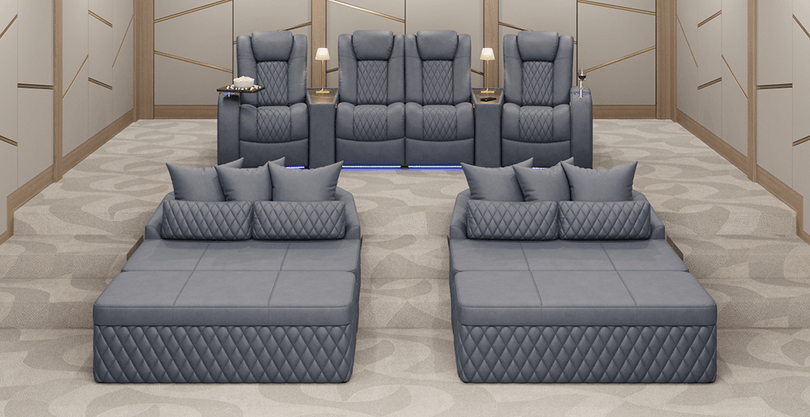
Your seating choice determines comfort and enjoyment when creating the perfect home cinema experience. Home theater recliners have transformed movie going by offering luxury comfort and practical functions. 4Seating has helped numerous customers locate the proper home theater seating, and we've found that certain crucial elements must be considered. To ensure years of enjoyment, consider comfort, space, usefulness, material quality, and affordability when buying home theater chairs. Comfort and Ergonomics For long viewing sessions, home theater chairs must be ergonomically sound. Explore which are those must-haves comfort-related features you should look for before buying one: 1. Body Support Systems Quality home cinema recliners include extensive support mechanisms to reduce body strain during long movies or binge-watching. Look for recliners with sufficient lumbar support to maintain your spine's natural curve and prevent lower back pain from improper posture. Adjustable headrests support your neck and head, reducing strain and letting you choose the best viewing angle. 2. Cushioning Quality Cushioning material greatly affects long-term comfort. High-density foam keeps premium home theater recliners shapely after years of use. Memory foam toppers provide tailored comfort by conforming to your body. Check the seat depth and width while testing a recliner to make sure it fits your body. 3. Recline Mechanisms How smoothly your chair reclines depends on the mechanism. Users with mobility concerns or those who value convenience will love home theater power recliners' one-button position adjustment. Many high-end home theater electric recliners include whisper-quiet German motors that won't disrupt movies during adjustments. For best comfort, choose models with independent footrest and backrest adjustment. 4. Adjustable Positions Finding your ideal relaxation position is crucial. High-end home theater recliners can be inclined for active watching or totally reclined for a more immersive experience. Some complex models let you save your preferred positions for rapid adjustments. Space and Room Layout As you know, space and layout will greatly affect your home theater seating options. Have a look at what else you should keep in mind regarding space: 1. Measuring Your Space Measure your room and screen distance before buying home theater recliners. Many people forget that recliners need space behind them to completely extend. We recommend 12-18 inches of clearance behind recliners for comfort at 4Seating. 2. Placement Considerations The positioning of your home theater recliners influences comfort and viewing. For best viewing, place recliners 1.5 to 2.5 times the screen's diagonal. Sightlines should be considered to ensure every seat can see the screen. 3. Recliner Types for Different Spaces Different settings need different recliners: Smaller rooms benefit from wall-hugger recliners that can fully recline close to walls. Flexible home theater reclining sectionals can fit unusual room layouts in larger spaces. Home theater reclining couches increase space by creating a coherent seating configuration. Home theater loveseat recliners maximize room and intimacy for couples. 4. Traffic Flow How individuals move around the room should inform your plan. Allow space between rows and around the seating area for easy access. Make sure front-row reclining chairs don't block the vision for people behind in multi-row arrangements. Features and Functionality Modern home theater chairs offer various features to enhance your viewing experience. Discover the specific qualities to consider when purchasing home theater seating: 1. Power vs. Manual Mechanisms Manual recliners are cheaper, while home theater motorized recliners are more convenient and precise. Since electric recliners can stop at any angle, you have practically endless customizing options. They're easier for weak or disabled people to use. 2. Convenience Features Look for home theater chairs with built-in features to improve movie-watching: Cup holders reduce spills and make drinks accessible. Swivel or drop-down tray tables hold food and remotes. Storage compartments organize and access essentials. USB charging ports recharge gadgets during long viewing sessions. 3. Advanced Technology Integration High-end home theater electric chairs work well with smart home systems. Some models have: Position memory programmability Theater-enhancing ambient lighting Built-in heat and massage systems enhance relaxation Whisper-quiet motors for adjustments without disturbing conversation. 4. Special Features For a truly premium experience, consider home theater recliners with specialized features: Power headrests and lumbar support with independent adjustment LED lighting in cup holders and along base rails Base rail lighting that improves visibility in darkened rooms Heat and massage systems with variable settings Material and Durability The materials utilized in your home theater reclining sofa or chair will affect its appearance and durability. Below are a few pointers to note when looking for material options & longevity: 1. Upholstery Options Choose upholstery that's comfortable, durable, and attractive: Genuine leather is more expensive but offers superior comfort, breathability, and durability. Top-grain leather has many features of full-grain leather at a lower cost. Premium textiles are cheaper and have more colors and textures. Families with children or pets’ benefit from stain-resistant performance fabrics. 2. Frame Construction Long-lasting home theater recliners need robust frames. Look for metal or wooden frames with reinforced edges and joints. Quality recliners have frames that can hold 300 pounds, and some heavy-duty ones 400 pounds. 3. Mechanism Quality In cheap chairs, the reclining mechanism wears down first. Buy recliners with silent, precision-engineered mechanisms. Steel mechanisms are more durable than plastic ones. 4. Maintenance Requirements Imagine how easy it will be to maintain the recliner. Certain upholstery varieties withstand stains and wear, while removable covers make cleaning easier. Leather needs occasional conditioning to prevent cracking, while textiles need more frequent washing but are easier to maintain. Budget and Warranty Home theater chairs are expensive, so consider immediate and long-term costs. What else should you look for? Here are some things to consider regarding prices and warranty terms: 1. Price Range Considerations Starter models start at $500, but deluxe sectionals can cost over $3,000 too. Set your budget before shopping, but quality seating is a long-term investment in comfort and pleasure. 2. Value Assessment Think about what matters most when assessing value. Power reclining, superior materials, and advanced features may be worth the cost for frequent moviegoers. Seats in home theater reclining sofas and sectionals are usually less than individual recliners. 3. Warranty Insurance A comprehensive warranty shows the manufacturer's trust in their goods. Quality home theater recliners should have a 2-year frame and mechanism guarantee, with some luxury brands giving 5-10 years. Be aware that some warranties only cover the frame, not the mechanism or upholstery. 4. Long-Term Investment Perspective Think about home theater chairs as a long-term entertainment investment. Quality chairs may cost more initially but endure longer and need less maintenance. Consider annual costs instead of just the initial purchase. Conclusion Selecting the right home theater recliner chair needs consideration of comfort, space, features, materials, and money. Choosing ergonomic design and support elements ensures long-term viewing comfort. Measuring your area and choosing the ideal configuration-individual recliners, home theater reclining sectionals, or loveseat recliners-optimizes comfort and viewing. Features like power recline mechanisms and convenience accessories will enhance your enjoyment, while premium materials will ensure the durability and look of your investment. At 4Seating, we consider home theater seats as crucial as audio-visual equipment. For years, your chairs will host movie evenings, sporting events, and gaming sessions. You may make an informed selection that balances your present needs with long-term fulfillment by considering these five essential aspects. A comfy, effective home theater recliner is about making memories, not simply appearances.

How to Create a Luxurious Movie Experience with the Perfect Theater Seating?
Premium seating options have helped many 4Seating customers turn their viewing spaces into entertainment hubs. Many people who want home theaters focus on audiovisual equipment, but over the years, we've noticed that seating creates much more immersive experiences. In this blog, we will inform you about appropriate home theater seating changes so that you know how you should watch movies, sports, and games at home! Why Home Theater Seating Matters? High quality home theater seating goes beyond comfort. Home theater seats prioritize ergonomics for long viewing sessions. Premium home theater seating aligns and supports the spine, reducing pain during binge-watching. These A+ quality seats come with great viewing angles to reduce neck & eye strain so you can watch for a long time (without moving). Luxury home theater seats use high-density, slow-recovery foams. These comfortable materials relax your body, reduce pressure points, and numbness too. Careful engineering creates an immersive entertainment experience. Properly constructed theater seating psychologically divides entertainment and living space. A mental shift like attending a commercial cinema improves focus and enjoyment. Popular Types of Home Theater Seating 1. Single Recliners These single recliners are the best theater seating in the market out there. Single armrests and customizable adjustments make these seats very comfortable. And the best part about these reclining home theater seats is that they let you choose their angle, be it for active viewing or just enjoyment. Modern electric recliners have unlimited positioning choices, unlike manual ones. Memory settings on premium models automatically restore activity-specific angles. These seats in rows give a very satisfying movie experience with out-of-the-box comfort for each viewer. 2. Sofa and Sectional Configurations For multi-purpose spaces or more casual environments, home theater couch seating provides versatility without sacrificing comfort. These layouts offer numerous activities beyond movie watching and often better suit family dynamics where closer sitting is needed. Home theater sectional seating offers modular versatility, allowing reconfiguration dependent on viewer count or gathering type. Many sectionals have central parts with drop-down consoles that provide cupholders, tables, and charging stations without losing seating. 3. Specialty and Stadium Options Home theater stadium seating elevates succeeding rows in dedicated theater rooms to provide uninterrupted sightlines. The professional cinema-inspired setup offers clear views regardless of the viewer. Home theater lounge seating with broader dimensions for more relaxed seating or bar-style seating for back rows create multi-functional rooms suited for casual viewing or providing drinks during athletic events. Customization Options for Personalized Comfort 1. Material and Upholstery Options Seating materials obviously affect all types of comfort and maintenance. Premium leather is luxurious and durable, while some performance textiles come with more textures and color options. The large choice of fabrics is a good thing as you can match your decor or create a unique theater design. Fabric choice sets the mood, be it theater-inspired red velvet to modern neutral stuff or bright hues. 2. Technological Integration Many modern home theater seats have amazing built-in technology. USB charging connections keep movie moments running smoothly, while LED-lit cup holders boost sight in the darkened cinema. Advanced models have wireless charging pads, 110V power outlets for laptops and other devices, and integrated sound systems that match your room's acoustics. These technological integrations make entertainment convenient and immersive. 3. Comfort Enhancements Heating and massaging luxury home cinema chairs make movie watching just like a spa. When you are seating for a long time, these therapeutic chairs go well with comfort and have health benefits. Headrests and lumbar support can also be adjusted to anyone’s body size, so that you can be comfortable for long use. Some models may have cooling features too or power adjustments for support points. Practical Considerations for the Setup of Home Theater 1. Space Planning Measure your space before buying home theater seating. For fixed-sized rooms, the "outside-in" approach determines how many seats fit comfortably. The "inside-out" method determines room dimensions based on seating capacity for flexible spaces like new construction. Seats near screens cause eye strain, while those far away reduce immersion. Industry guidelines suggest viewing distances of roughly 1.5-2.5 times the screen width for optimal enjoyment. This calculation should guide room size and seating. 2. Tier Seating Options Multiple seating rows require careful arrangement for clear perspectives. For clear sightlines over front-row viewers, home theater seat risers raise back rows by 7-12 inches. You can build these platforms during room construction or use home theater-specific products. Properly designed risers put spectators at varied heights from speakers, improving visibility and acoustics. This strategic elevation optimizes sound dispersal, improving audios for all spectators. 3. Accessibility & Traffic Flow Space mobility must be considered in practical design. Leave at least 30 inches for walkways between rows and walls to allow comfortable access without disturbing other spectators. The precise placement of steps, lights, and railings assures safety without compromising the theater beauty. Plan access and departure paths that minimize disruption during viewing, especially for instances where viewers may need to leave briefly. Strategic route lighting that maintains visibility without reducing screen contrast helps greatly with the professional impression of the environment. Benefits Beyond Comfort of Theater Seating 1. Home Value Enhancement Premium home theater seating signifies an investment that can boost your property's market value. When done well, dedicated theaters with professional seats are selling factors and provide a high ROI. Entertainment rooms are standard in luxury homes today. A well-designed cinema room with comfortable seats conveys elegance and attention to detail to home entertainment enthusiasts. 2. Multipurpose Use The best home theaters are multipurpose. Gaming is comfortable like movies, and customizable setups enable interaction during sports or casual parties. This adaptability guarantees your seating investment meets several entertainment needs. Adjustable home theater recliners allow for interactive gaming or social viewing and fully reclined movie viewing. This versatility maximizes seating and space functionality. 3. Acoustic Benefits Quality home theater seating contributes greatly to room acoustics. Premium seat materials and structure absorb sound reflections that could cause echo or distortion. Properly placed seating rows improve room sound dispersal. Home theater seat upholstery complements acoustic panels to create the best sound environment. This form-function integration shows how every element in a well-designed theater enhances the experience. Conclusion Good movie theater seats for home and great ones often depend on seating quality and configuration. At 4Seating, we've seen how good home theater seats improve comfort and entertainment. Custom home theater seating combines comfort, technology, and design to immerse you in your favorite content. When establishing a movie room or updating an existing one, careful seating will provide years of comfort and delight. Home theaters are private entertainment hubs. Buy quality-grade home theater seating to make each of your movie nights, gaming sessions, or party an exciting experience. Get something that exceeds commercial movie chairs while being in the comfort of your home.
The Ultimate Guide to Making Home Theater Seats More Comfortable
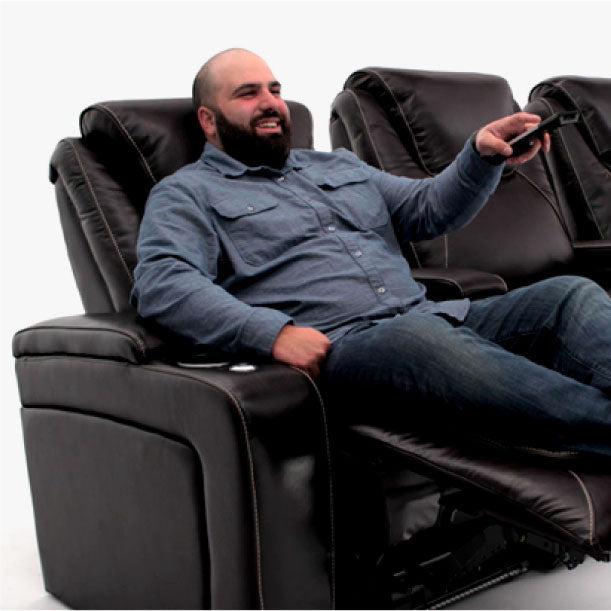
4Seating knows that the optimal home cinema experience goes beyond choosing the correct multimedia equipment. While watching movies, your seat comfort can make or break the experience. A well-designed home cinema setup needs comfortable seating for long watching sessions. We'll cover materials, ergonomics, smart attachments, and layout in our thorough guide to home theater seat comfort. High Quality Materials Home theater seat comfort, durability, and upkeep depend on the material. That’s why it is important to take materials into account for making your seats comfortable. 1. Premium Leather Options Leather is a popular home theater seating option due to its durability and luxury. Italian leather is very high-quality. High-end seating reviews say genuine leather adapts to your body temperature, staying cool in summer and warm in winter. It is more expensive than other materials, but its durability and elegance make it a good choice for bespoke home theater chairs. 2. Microfiber and Fabric Options Fabric home theater seating is more suitable for people who have families with kids and pets. That is because water and stain-resistant microfiber are both soft and cozy. These hypoallergenic materials are easier to maintain & better for skin. 3. Velour and Specialty Fabrics Velour fabric takes back to the nostalgia of old movie theaters. This material is also both luxurious and comfortable. To combine an ancient feel with comfort, this home theater setup would use these unique materials. Ergonomic Design Despite popular assumption, the plushest seat isn't always the comfiest for long watching. In most cases, ergonomic home theater seating gives true comfort. 1. Lumbar Support Lumbar support should go with your lower back curve, which only comes in good home theater seats. This reduces hunching and pressure when you are watching something for a long time. Prioritize such home theater chairs that come with adjustable lumbar support for all kinds of body types and viewing preferences. 2. Headrest Options An adjustable headrest maintains your neck's natural curvature, reducing discomfort during long viewing. Advanced home theater seating often has power-adjustable headrests for excellent support and viewing angles, keeping you comfortable during long movie marathons. Reclining Features Reclining is also an aspect you need to keep in mind for home theater seating comfort. Modern recliners have a lot of positions for different tasks. 1. Power Reclining Technology Modern premium home theater seating has power reclining options for various adjustment options. These devices come with a lot of seating positions so that you can decide the most preferred viewing angle. Some seats also save your position in memory. 2. Wall-Hugger Design Home theaters with limited rooms can go for wall-hugger recliners. Since the base remains stable and the back slides, these ones can fully recline with 4 inches of wall clearance. Also, they fit in smaller areas too and recline because of their space-saving design. 3. Integrated Footrests When you are watching for long hours, it requires leg support from footrests. The best home theater seats have reclining and footrest extension. This function is also important to look for long-term viewing comfort. Customization Options Home theaters seating measurements vary with models; therefore, modification is important for comfort. 1. Size Variations Usual home theater seating sizes are from 20 to 26 inches in width & back heights from 24 to 28 inches. To personalize these home theater sizes depending on your body type and preferences is of utmost importance to ensure comfort for years to come. 2. Row Configuration Your home theater seating layout should fit your space, be it one or more rows. You can maximize your space & improve the viewing experience too with these custom home theater seats in straight rows, curved formats, or L-shaped sectionals. 3. Special Requirements Some models have motorized adjustable seat height, which raises rows up to 8 inches. These home cinema seat risers provide stadium-style viewing. That too without permanent construction, which guarantees that everyone can see the screen. Smart Accessories & Features The appropriate accessories can improve home theater seat comfort. Check out which ones are must-haves: 1. Integrated Cup Holders & Tray Tables Cup holders minimize spills, and you do not need to stand during movies causing disturbance. Advanced home theater seats have such retractable tray tables for food and devices. 2. USB Charging and Power Options USB connections and power outlets in modern home theater chairs help you change your devices. 3. Massage and Heating Features For maximum comfort, choose home theater seats with massage and heating functions. These functions reduce tension and relax you while watching. Personalize your massage with multiple zones and intensity levels. Optimizing Your Home Theater Seating Layout Seating configuration greatly affects comfort and viewing experience. Have a look at all the options you can test for setting up your seats. 1. Curved vs. Straight Configurations Curved home theater seating improves viewing angles for everyone, especially end-row seats. This setup naturally draws attention to the screen and works well in larger areas. Straight layouts are classic but work well in compact areas and can fit more seats. 2. Tiered Seating Benefits Using home theater seat risers in tiers allows everyone to see. With built-in risers or platforms lifting rear rows by 8 to 14 inches, modern home theater seating arrangements often echo cinema. This setup simulates a commercial theater while emphasizing comfort. 3. Spacing Considerations For comfortable travel, home theater seating layout planning should incorporate 20-inch row spacing and 1.5 to 2.5 times screen width from the screen. These home theater seating dimensions optimize comfort and viewing for all participants, producing a balanced and enjoyable setting. 4. Streamlined Aesthetics While providing optimal comfort, contemporary home theater seating has clean lines and minimalist detailing. Designs like diamond-stitched patterns, contrast piping, and discreet LED embellishments provide visual interest without losing functionality. These design details make your theater seating match your home's style. 5. Mixed Materials and Colors Two-tone color schemes or mixed materials are common in modern home theater chairs to match your décor. This makes your theater feel like part of your home's design rather than just a utilitarian room. Color and material customization make it easy to coordinate design. Maintenance Tips for Long-lasting Comfort 1. Material-Specific Care Periodic washing with proper upholstery solutions helps fabric home theater seating avoid drying and cracking, while leather requires regular conditioning. Following manufacturer instructions for your material provides long-term comfort and attractiveness, safeguarding your investment. 2. Mechanism Maintenance Follow manufacturer instructions to check and lubricate reclining mechanisms. The preventive maintenance maintains your seats running smoothly and quietly, improving your viewing experience by removing irritating noises and restricted movement. 3. Cushion Care Regularly rotate and fluff cushions for optimal support and wear. This easy habit extends the comfort life of your home theater chairs and provides constant performance over years of use, maximizing your investment. Wrapping Up! The ideal home theater combines comfort and performance. Quality home theater seats with ergonomic support, configurable features, and thoughtful accessories create an immersive entertainment experience. We have alternatives to improve your viewing comfort, whether you prefer leather, microfiber, or velour. Remember that your home theater seating is an investment and a place you'll spend hours. Considering materials, ergonomics, layout, and accessories, ensure that every movie night, game session, or sporting event is comfortable and engaging.