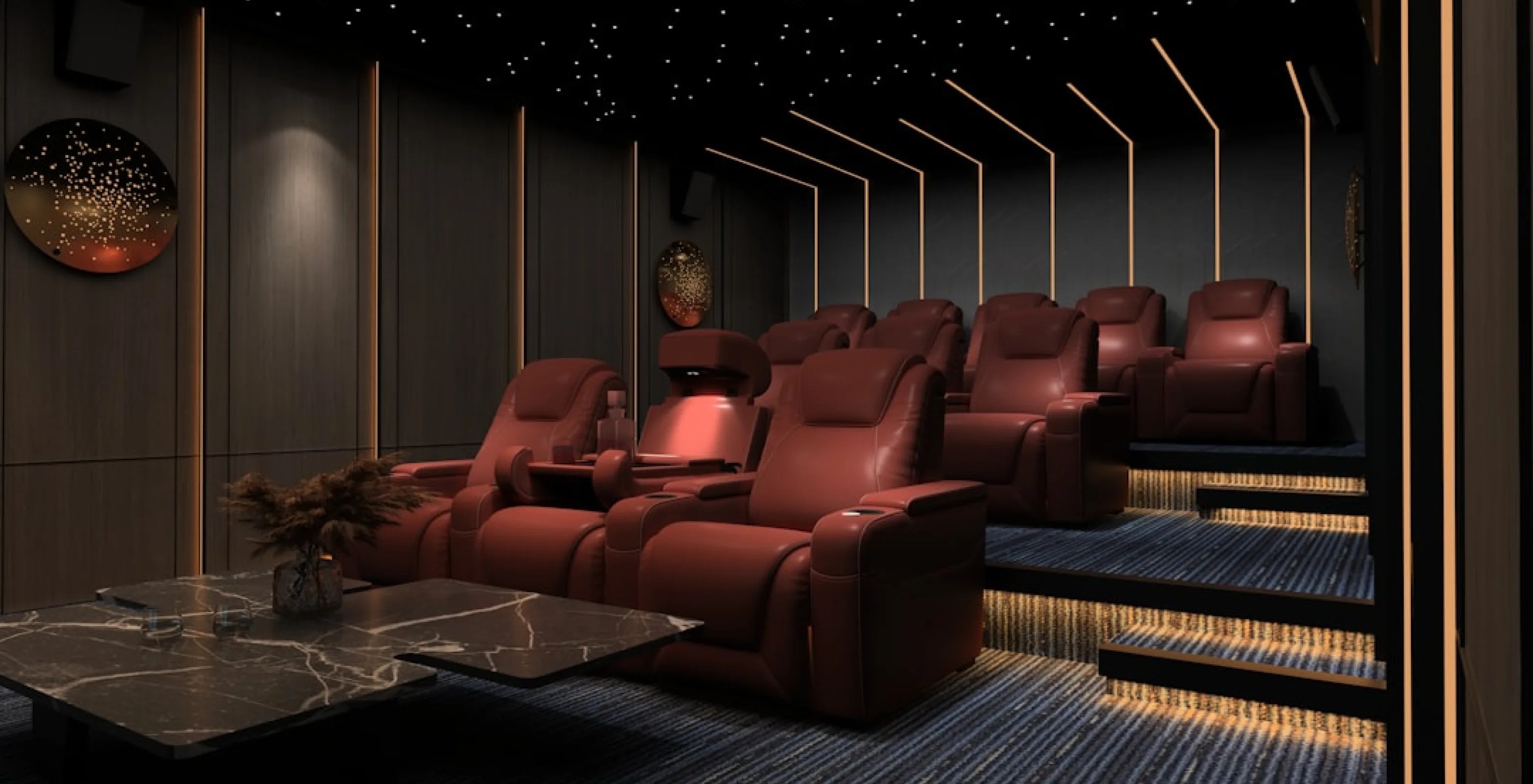
Sofa vs. Sectional vs. Recliner Row: Choosing Seating for Your Media Room
Start with the room: is it a living room that happens to have a TV, a family hangout that doubles as movie night, or a space built just for the screen? That answer decides more than any spec sheet.
A sofa suits a room that's mostly a living room. A multimedia sectional suits a media room where people sprawl out in different configurations. A row of recliners suits a dedicated theater, where per-person recline and consoles matter more than sharing one cushion.
None of these three is objectively better. Each solves a different room problem, and a sectional vs recliner row decision usually comes down to how the room gets used, how many people watch together, and how much floor space is left once you subtract walkways and equipment. So which one fits your room, and is it worth mixing two? The sections below walk through each.
Sofa vs. Sectional vs. Recliner Row: Which Fits Your Media Room?
Use this table as a starting filter, then read the section for your pick below for the reasoning behind it.

| Sofa | Sectional | Recliner Row | |
|---|---|---|---|
| Best room type | Multi-use living room / media room combo | Family media room, open floor plan | Dedicated home theater |
| Typical seat count | 2-4 (loveseat to 4-seat sofa) | 5-8+ across an L, U, or chaise layout | 2-4 per row; add rows for more |
| Recline | Manual recline on some models; many are fixed | Power recline common on chaise and corner sections | Power recline on most models, controlled per seat |
| Footprint / clearance | Compact; no rear clearance needed on fixed-back models | Wide footprint for the L/U shape, plus walkway space | Rear clearance per seat; varies by model and mechanism, check each product's specs |
| Per-seat controls | Shared cushions, no individual control | Per-section, sometimes per-seat on power models | Per-seat controls on power models |
| Common extras (model-dependent) | Track arms, throw-pillow styling | Storage consoles, cupholders, USB in the arms or console | Cupholders, consoles, USB, LED base lighting, heat and massage options |
Match the room's actual use, not the look you want, and the right category usually becomes obvious.
When a Sofa Wins
A sofa wins when the room isn't a dedicated theater. If the same space hosts guests, doubles as a reading nook, or needs to look like a living room when the screen is off, a sofa's simpler profile fits better than a bank of recliners.
Sofas also suit smaller households. A loveseat or a 3-seat multimedia sofa covers two to three regular viewers without committing floor space to a layout built for six or eight. A quick check: if you rarely have more than four people watching at once, a loveseat or sofa is the easier starting point than a full sectional.
The trade-off: a typical sofa doesn't give each viewer independent recline, and shared cushions mean one person's shifting affects the person next to them. Multimedia sofas close some of that gap. Some models built for media rooms add individual power recline, powered headrests and consoles between seats, so you get sofa styling with row-style features.
- Browse our Sofas & Sectionals for Media Rooms
Choose a sofa when the room still has to work as a living room, and let a media-room sofa close the comfort gap instead of a straight recliner row.
When a Sectional Wins
A sectional wins when the room needs to seat a family or a rotating group of friends, and the floor plan allows an L, U, or chaise shape. Sectionals turn corners other seating can't, so they use an awkward room shape, like an L-shaped basement or a bonus room with a bump-out, more efficiently than a straight row.
Think of it like a sofa that can bend around the room instead of sitting flat against one wall. A media room sectional also flexes by occasion in a way a fixed sofa can't: a chaise end works for someone who wants to stretch out during a long movie, the straight section seats a full row on game night, and a corner section fills a gap a single sofa would leave empty.
Most sectionals come in a fixed arrangement, but you can usually rearrange the middle seats and the corner as your needs change. The Haven Lounge Home Theater Seat Chaise Sectional is one example of a chaise sectional, sold in 104", 120" and 132" widths. That layout flexibility is a big reason media rooms with mixed-use floor plans lean toward a sectional over a reclining sectional vs theater seating setup built for one purpose. If you're weighing chaise, L-shape, or U-shape against a straight sofa, our sectional sizing guide breaks down the shapes and dimensions in more depth.
The trade-off is footprint. A U-shaped sectional needs floor space on three sides, plus walkway room to get in and out of the chaise ends. Measure the full L or U against your actual wall widths before ordering. A sectional earns its footprint when the room needs flexible, family-sized seating that a fixed sofa can't give you.
When a Recliner Row Wins
A recliner row wins when the room is a dedicated home theater and per-person comfort matters more than shared seating. Individual reclining seats give every viewer their own recline angle and footrest and, on models that offer them, their own cupholder, heat, massage or lumbar settings, without anyone's movement disturbing the seat next to them.
That's the difference behind a home theater couch vs recliners debate: a couch shares one cushion and one mood, a row gives everyone their own. Recliner rows also scale cleanly, which is another reason they suit a dedicated room better than a fixed sofa. A 2-seat row runs about 62-86 inches wide, a 3-seat row about 90-126 inches and a 4-seat row about 117-164 inches, depending on the model, so a room can start with a single row and add a second row on a riser as the household and the guest list grow.
The Luminis Zero Gravity Home Theater Seating with Heat & Massage, our 2026 favorite row, shows what a modern theater seating setup looks like: zero-gravity recline, heat and massage, and per-seat power controls, in rows of 2 to 5.
- Browse our Home Theater Seating
The trade-off is footprint behind each seat. Full recline needs clearance to extend the footrest and tilt the back. A wallhugger is built to need less: it needs only a small gap between the back of the seat and the wall when fully reclined, about 3" to 6.5" across Seatcraft models. The Sienna Italian Leather Spacesaver Home Theater Seating Single Recliner, for example, needs 3" from the wall to fully recline. For models that aren't wallhugger designs, the Dimensions tab lists Full Recline, the distance from the wall when fully reclined. Check the Specifications and Dimensions tabs of the model you like, and if the room sits close to a rear wall, check that number first.
Bottom line: choose a recliner row when the room is built for movies first, and let per-seat comfort be the deciding factor.
Mixing It: Row Plus Sofa or Sectional
You don't have to pick one category for the whole room. A common layout puts a recliner row up front, closest to the screen, and a sofa or sectional behind it, either at floor level for a casual overflow row, or raised on a riser so the back row can see over the front.

This works especially well for households that watch differently depending on who's in the room. The front-row recliners handle solo movie nights and marathon sessions, while the back sofa or sectional handles game night, kids sprawled out, or extra guests who don't need a dedicated recliner.
Mixing can also be a value option, and it suits rooms that need extra rows for guests. If you only need a few additional seats on movie night, a sofa or sectional behind a recliner row can fill the space without each seat being a full recliner.
One planning note: power recline models plug into a standard 110v wall outlet, and each seat may need its own. Manual models don't plug in, and a licensed electrician can advise if you need new outlets.
If you're not sure how the mix will feel, our theater recliners vs. sofas guide breaks down the comfort and space trade-offs in more depth, and our couch-to-TV distance guide covers how far back any of these three options should sit from the screen.
Measuring Before You Decide
Before ordering anything, measure the room, not the furniture photo. Three numbers matter most:
- Wall width, so you know whether a row, a sofa, or a full sectional shape actually fits without crowding a doorway or vent. Then use the exact width of the configuration you choose, listed on the product page (a 3-seat row runs about 90-126"). Sectional footprints are listed in the configuration options.
- Rear clearance, especially for recliner rows and any sectional chaise with power recline. Wallhugger clearance is about 3" to 6.5" across Seatcraft models, so confirm the number on the product's Specifications tab.
- Walkway space, so anyone getting to a middle seat or an aisle doesn't have to ask a fully reclined row to sit up.
Sectionals ship in sections, which usually helps get them through doorways and stairwells, but measure your narrowest turn if the room is a finished basement or an upstairs bonus room. Those three measurements, taken before you shop, settle most of this decision on their own.
Where to Start: 4Seating's Top Picks for a Media Room
If a sectional or a recliner row is looking like the right fit, these two are a good place to start.
- Haven Lounge Home Theater Seat Chaise Sectional - a chaise sectional with power recline, sold in 104", 120" and 132" widths.
- Luminis Zero Gravity Home Theater Seating with Heat & Massage - our 2026 favorite row, with zero-gravity recline, heat and massage, and per-seat power controls, in rows of 2 to 5.
Photos and spec sheets only tell you so much about how an upholstery feels in your room's lighting, so sample swatches are available for many upholstery options. Seating from 4Seating ships free across the continental US.
Check each model's recline depth on its Dimensions tab against your room's measurements before you order. For anything the product page doesn't cover, our customer help line is open during business hours at 1-800-407-8665.
About this guide: Since 1997, 4Seating has been selling home theater seating, including the sectionals and recliner rows covered here.