Theater Recliner vs. Regular Recliner: What Actually Differs
A theater recliner clips into a row of matching seats with a shared console between them, while a regular recliner sits alone against a living room wall. That's the theater recliner vs regular recliner question in one sentence.
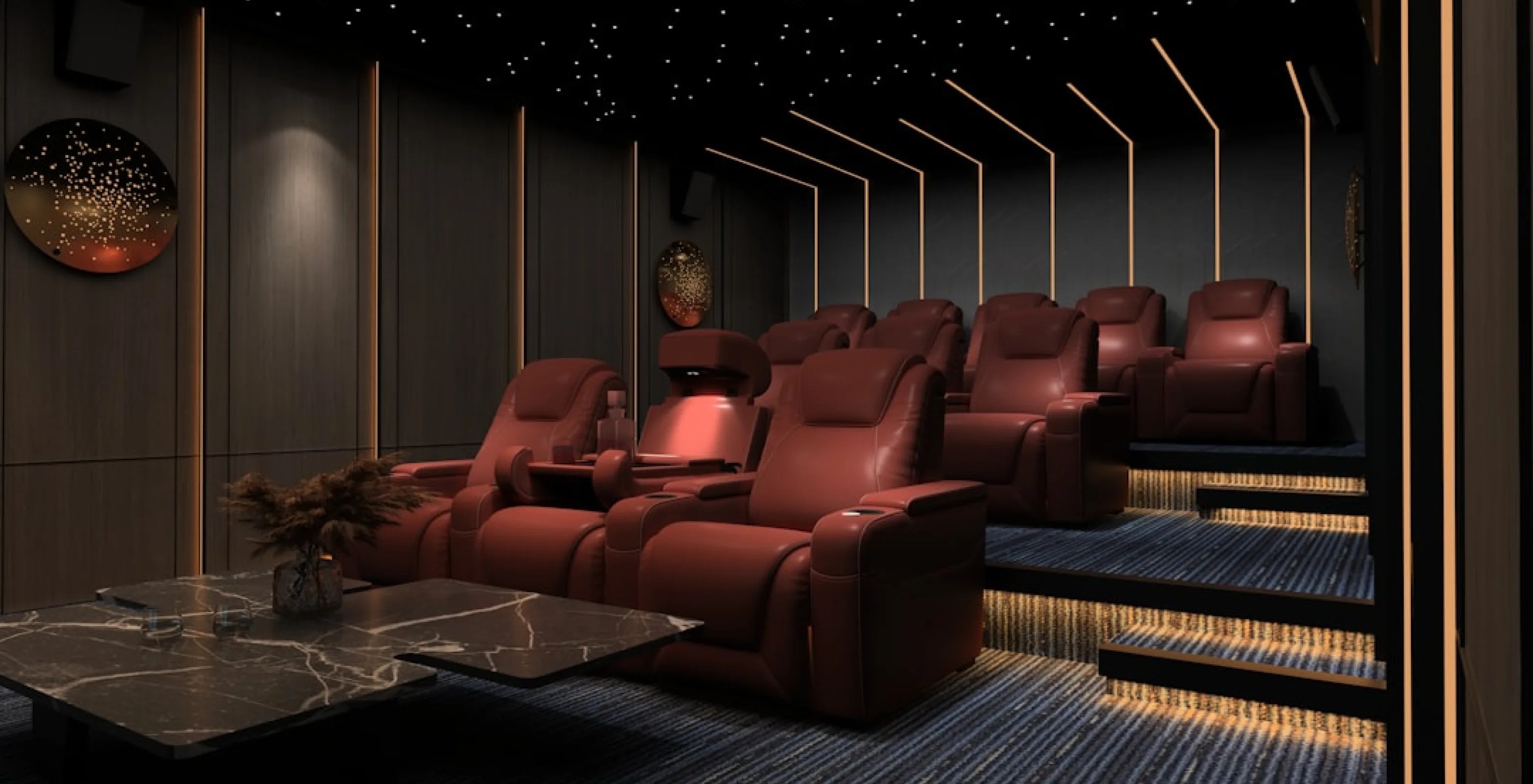
A theater recliner connects edge-to-edge with matching seats, sharing a console, cupholders, and often power controls, to form a uniform row. A regular recliner is a single, stand-alone chair sized for a living room. Whether you're weighing a home theater recliner vs regular recliner, or just wondering what is a theater recliner, the real differences show up in three places: room fit, comfort during long movies, and what drives the cost.
Do you need a single theater recliner to start or expand a row, or a chair that's happy to sit on its own? The sections below sort it out.
What Is a Theater Recliner?
A theater recliner is a single reclining seat built to connect edge-to-edge with the seats beside it, forming a matched row instead of standing alone. Each seat usually shares a slim armrest console with its neighbor, home to the built-in cupholders and, on many models, covered storage.
Because a row is built from matching seats, they line up in height, upholstery, and often power controls, giving a media room a uniform, theater-style look.
Many theater recliners also come in a wallhugger version, which glides forward as it reclines instead of tipping straight back, so it needs less space between the seat back and the wall. SpaceSaver is a different feature: a thinner armrest, which trims row width. Many regular recliners skip the wallhugger mechanism, since living-room chairs are more often placed with open floor space behind them.
Quick check: measure from your chair's back to the wall behind it, then compare that to the clearance on the product page for the fully reclined seat. If the gap is tight, a wallhugger design is worth a look. See our wall hugger recliner guide for how the glide mechanism works.
- Browse our Single Theater Recliners
A theater recliner is built to match its neighbors, and a regular recliner is built to stand on its own.
Feature-by-Feature Comparison
Side by side:
| Feature | Theater recliner | Regular recliner |
|---|---|---|
| Connects into a row | Yes, clips or bolts to matching seats; rows run from 2 to 5 seats | No, sold and placed as a single, stand-alone chair |
| Shared console | Common: a slim armrest console with cupholders between seats | Uncommon: any cupholder is usually built into the chair's own arm |
| Wallhugger recline | Often available: the seat glides forward to recline close to a wall | Varies by model: many need open floor space behind the chair to recline fully |
| Power recline, lumbar, headrest | Often power-adjustable; control layout varies by model, check the product page | Ranges from fully manual to power, depending on the model |
| Base lighting | Common on theater rows (LED accent lighting under the seat) | Uncommon on a standalone recliner |
| Footprint | Set by the row size you choose | Sized as one chair, roughly the footprint of an armchair |
A theater recliner asks for more upfront planning (row width, console placement, upholstery match) in exchange for a finished, built-in look. A regular recliner asks for less planning and gives you more freedom to mix pieces in the room.
Rows reward planning, and single chairs reward flexibility.
Comfort Differences
Both can feel good, depending on whether you're sitting as a group or on your own.

Theater recliners lean structured. Even with a deep recline and an extended footrest, a row keeps neighboring seats at the same height and angle, which suits a group that wants a shared, relaxed position.
Zero gravity recline is available on many theater rows. It lifts your legs while your back eases down into a deep lounge position. It's a bit like kicking your feet up on an ottoman, except the whole chair is built to move with you.
A regular recliner is built for one person's preference instead: plush cushioning and a deep, personal recline, with the exact angle and firmness that suits you alone.
Comfort features like power lumbar or zero gravity recline are designed to make sitting more pleasant.
Pick structured and matched for a group, and personal and plush for solo comfort.
Space Differences
A theater recliner's footprint depends on seat count, which is easier to plan around than the shape of one chair.

For standard home theater seating, product pages list a row of 2 at about 62" to 86" wide, a row of 3 at about 90" to 126", a row of 4 at about 117" to 164" and a row of 5 at about 145" to 178". The Sienna Italian Leather Spacesaver row of 3 is the narrowest at 90", and the Solis with straight console row of 3 is the widest at 126". Check the exact width of the configuration you pick, and measure your wall first.
Some theater rows also sit on a riser, which lifts the back seats so everyone sees over the row in front, the tiered arrangement often called stadium seating. SoundRight risers come in 7" and 14", and a stand-alone recliner never needs one.
A regular recliner needs to be measured on its own terms, because its clearance depends on the model. Wallhugger clearance, the space a seat needs between its back and the wall to recline fully, is about 3" to 6.5" across Seatcraft models (the Sienna needs 3" and the Napa 5"). Check the Specifications tab for the exact chair, and the Dimensions tab for its Full Recline depth.
Power recline models plug into a standard 110v wall outlet, and each seat may need its own, while manual models don't plug in at all. If you need new outlets near the row, a licensed electrician can plan that.
Either way, measure wall width and clearance before you buy. See our guide on how far your couch should be from the TV for screen-distance math.
Cost Differences
Neither chair type has a fixed price. The real cost drivers are seat count, upholstery grade, and feature load, the same things that drive any upholstered furniture price.
A regular recliner is priced one chair at a time, so it's easy to add a single seat gradually. A theater recliner is typically priced as part of a row, so upgrading a feature such as leather grade, power headrest, or heat and massage multiplies with the number of seats in the row.
Starting small, you can add features one seat at a time. Building a full row, settle on your feature list before you order, since it applies to each seat you add.
Shipping is one cost you can cross off either way, because 4Seating's seating ships free anywhere in the continental US. Qualifying in-stock seats ordered before 2pm PST can ship within 24 hours, with restrictions. Sample swatches are available for many upholstery options, so you can check the material first.
Price follows features and seat count, not whether the chair connects to its neighbor.
Which Should You Choose?
If you're filling a dedicated media room or want your seats to match, start with a row. You can always add a single recliner later to extend it.
- Browse our Home Theater Seating collection
Our best-selling single recliner in 2026, the Luminis Zero Gravity Home Theater Seating with Heat & Massage, is a solid way to start a row, with a power headrest, power lumbar and heat and massage.
If your room is smaller, doubles as a living space, or you want continuous seating rather than individual recliners, a theater sofa closes that gap without losing the recline. The Armada LT HeatZero Italian Leather Home Theater Sofa gives you a continuous, sofa-style row with the same zero gravity recline and heat and massage as a single theater recliner.
- Browse our Sofas & Sectionals collection
Match the seat type to how you actually use the room, and not the other way around.
Not sure which fits your room? Check each model's Dimensions tab against your measurements. Still have a question the product page doesn't answer? Our customer help line is available during business hours at 1-800-407-8665.
About this guide: Since 1997, 4Seating has been selling home theater seating, including the theater recliners covered here.