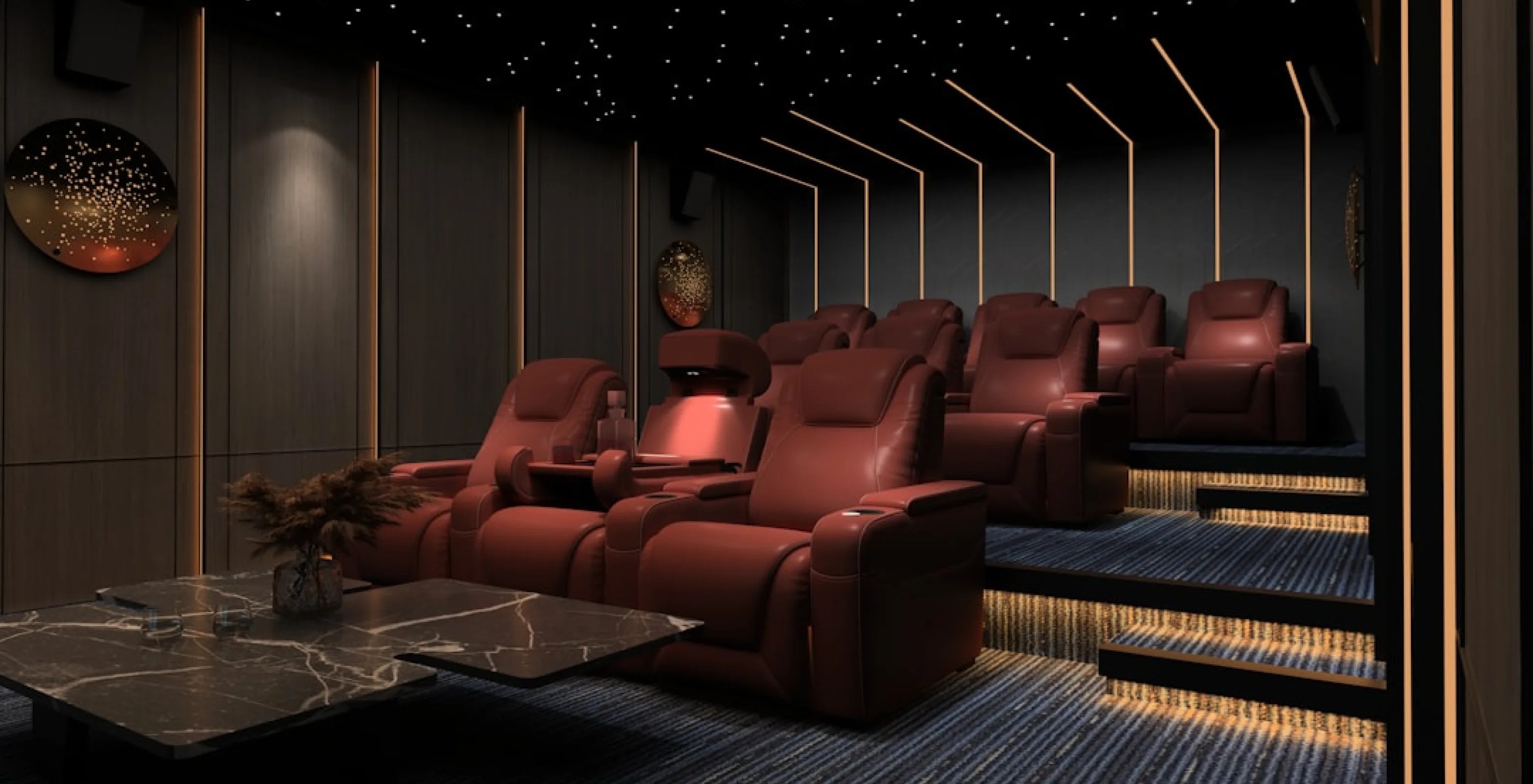
Buying Used Movie Theater Seats: What to Check Before You Buy
Share
A listing turns up: a dozen matched rows, pulled from a multiplex that just closed, priced below new. Used movie theater seats and vintage theater seats can both cost less than new ones, but they're often sold without a manufacturer warranty and may need work.
Before you buy, check the frame for cracks, test the rocker or fold-up mechanism, inspect the upholstery, confirm the mounting hardware fits your floor, and count how many seats actually match, not just how many are listed.
You don't need to be an expert: the sections below show how to tell a recent commercial pull from a true vintage find, what to check in person or on video before you pay, and when new seating is the better deal.
Whether you're outfitting a church sanctuary, a community theater, a home cinema, or a small commercial screening room, used theater seating turns up in listings at many price points, from a handful of worn seats pulled out of a closed multiplex to a vintage row from a mid-century movie palace.
The appeal is obvious: new commercial movie theater seating is sold and priced by the row, and a used lot can look like a shortcut to the same look for less. Whether it is depends on what you check before money changes hands.
Used Movie Theater Seats vs. Vintage Theater Seats: Where They Come From
Most used theater seating on the market falls into one of two categories, and knowing which one you're looking at changes what to expect on delivery day.
The first is recent commercial pulls: seats removed during a theater renovation, a chain's switch to recliner-style auditoriums, or an outright closure. These are often rocker-back auditorium seats, typically mounted on continuous rails in matched rows, and relatively close in age and condition to how they looked on installation day.
The second category is vintage seating, often decades old, salvaged from single-screen movie palaces or independent theaters that have since closed or been demolished. Vintage pieces are usually sold in smaller quantities, sometimes as single chairs rather than full rows, and their value leans more on look and history than on ready-to-sit comfort.
Ask the seller one question first: did these come from a theater that closed in the last few years, or a venue that closed decades ago? The answer tells you whether you're buying a near-ready row or a restoration project, since a recent pull may need little more than cleaning while a vintage piece is closer to a restoration.
Both categories move through the same channels: online marketplaces and classifieds, theater liquidation and salvage dealers, auction listings, and estate sales. Availability is unpredictable. A seller might have a dozen matching seats one month and none the next, which is why buyers who need a specific row length, color or seat count often end up watching several channels at once. Ask when and why the seats came out of service before you ask about price.
What to Check Before You Buy
Treat a used theater seat listing the way you'd treat a used car: the photos tell you the color, not the condition. Ask for close-up photos or a video of the mechanism in motion, and if the seats are local, see them in person before you pay.
| What to check | Why it matters | Red flags |
|---|---|---|
| Frame | Carries the seat's weight and anchors the mechanism; a cracked or rusted frame is often not worth repairing | Visible cracks, rust at weld points, wood that flexes or feels soft |
| Rocker / fold-up mechanism | This is what moves each time someone sits down or stands up | Grinding, binding, a seat that doesn't spring back upright on its own |
| Upholstery | The most visible wear point, and a costly one to redo across a full row | Torn seams, flattened or cracked foam, mismatched colors between seats in the "same" lot |
| Mounting hardware & rail spacing | Commercial seats bolt to specific rail systems; a mismatch can mean new hardware or a different install method | Missing brackets, unusual hole spacing, no rail included |
| Quantity & matching | A row needs seats that match in color, arm style and mechanism type | Listing photos that mix models, or a seller who can't confirm the exact count |
| Paperwork & history | A public venue's seating questions go to your local code official, and a seller who knows the seats' history makes that conversation easier | The seller can't say where the seats came from or what they were installed in |
If you're sourcing seating for an institutional space rather than a home theater, our church seating guide and our auditorium seating guide cover the capacity, aisle and code questions that come up alongside seat condition. Both are worth reading in parallel if this is a sanctuary, community theater or auditorium project. A seat that looks fine in photos can still fail on the frame, the mechanism, or the count, so check all three.
Vintage Restoration Realities
A vintage row can be a beautiful centerpiece for a themed home theater or a restored single-screen cinema, but go in with realistic expectations about the work involved.
Original upholstery on seating more than a few decades old often needs replacing, so plan to reupholster each seat. That's usually the biggest cost and time factor in a restoration, and it varies a lot with the seat and your area. Get a quote from an upholsterer who works on theater seating before you buy, not after. Wood arms, end panels and cast-metal bases can often be stripped, repaired and refinished by a furniture restorer.
Replacement mechanism parts for discontinued models can be hard to find, so a seat with a broken spring or a cracked hinge may need a custom-fabricated fix rather than a factory part. None of this rules out a restoration. It means the listing price is usually the starting cost, not the finished one.
Rows assembled from multiple sellers over time rarely match perfectly in color or wear, even when the model is the same, a detail that shows more in a small screening room than in a large hall. Budget more time than you'd expect, too, because reupholstery and parts sourcing can stretch a restoration well beyond the day the seats arrive. Price in the reupholstery and parts hunt before you call a vintage listing good value.
New vs. Used: Cost Drivers, Warranty & Lead Time
There's no universally right answer between used and new. It comes down to what you're optimizing for: budget, condition certainty, timeline, or a vintage look that only an old row can deliver.
| Factor | New commercial seating | Used / vintage seating |
|---|---|---|
| Cost drivers | Seat count, upholstery material, base type (free-standing vs. bolt-down) | Age, condition, completeness of matching seats, and how much restoration work is needed |
| Warranty | Seatcraft's 1-year limited warranty and the optional 5-Year Accident Protection Plan both cover seats in a home, not commercial use. Call 4Seating at 1-800-407-8665 to ask what applies to a commercial install | Often sold as-is; ask the seller whether any warranty applies |
| Lead time | Qualifying in-stock seats ordered before 2pm PST can ship within 24 hours (restrictions apply); the product page shows the lead time once you pick your configuration and color | Unpredictable; depends on what a seller currently has listed |
| Condition consistency | Seats in a new row are matched in upholstery and mechanism | Varies seat to seat, even within a single "matched" lot |
| Codes | Your local code official decides what your venue needs, so check with them before you buy | Depends on the seat's age and original installation; ask your local code official |
For a public venue, the International Building Code is a model code that local jurisdictions adopt and sometimes amend, so your local code official has the final word on seating.
If the deciding factor is a fresh, matched row without the inspection and restoration work, 4Seating's commercial movie theater seating comes as bolt-down or free-standing no-drill rows like the Seatcraft Madrigal, or as a multi-row riser package for a stepped layout. Commercial seats in a row of 3 are about 72" to 78" wide, such as 74.5" for the Madrigal, so measure your wall before you compare against a used row.
- Browse our Stadium Movie Seat Packages
- Browse our Home Theater Seating if this is a personal screening room rather than a commercial venue
Sample swatches are available for many upholstery options. New seats ship free anywhere in the continental US, whatever size your order is. To order by phone or ask a remaining question, call our customer help line during business hours at 1-800-407-8665.
About this guide: 4Seating has sold theater seating since 1997, including the new commercial movie seats in this guide.