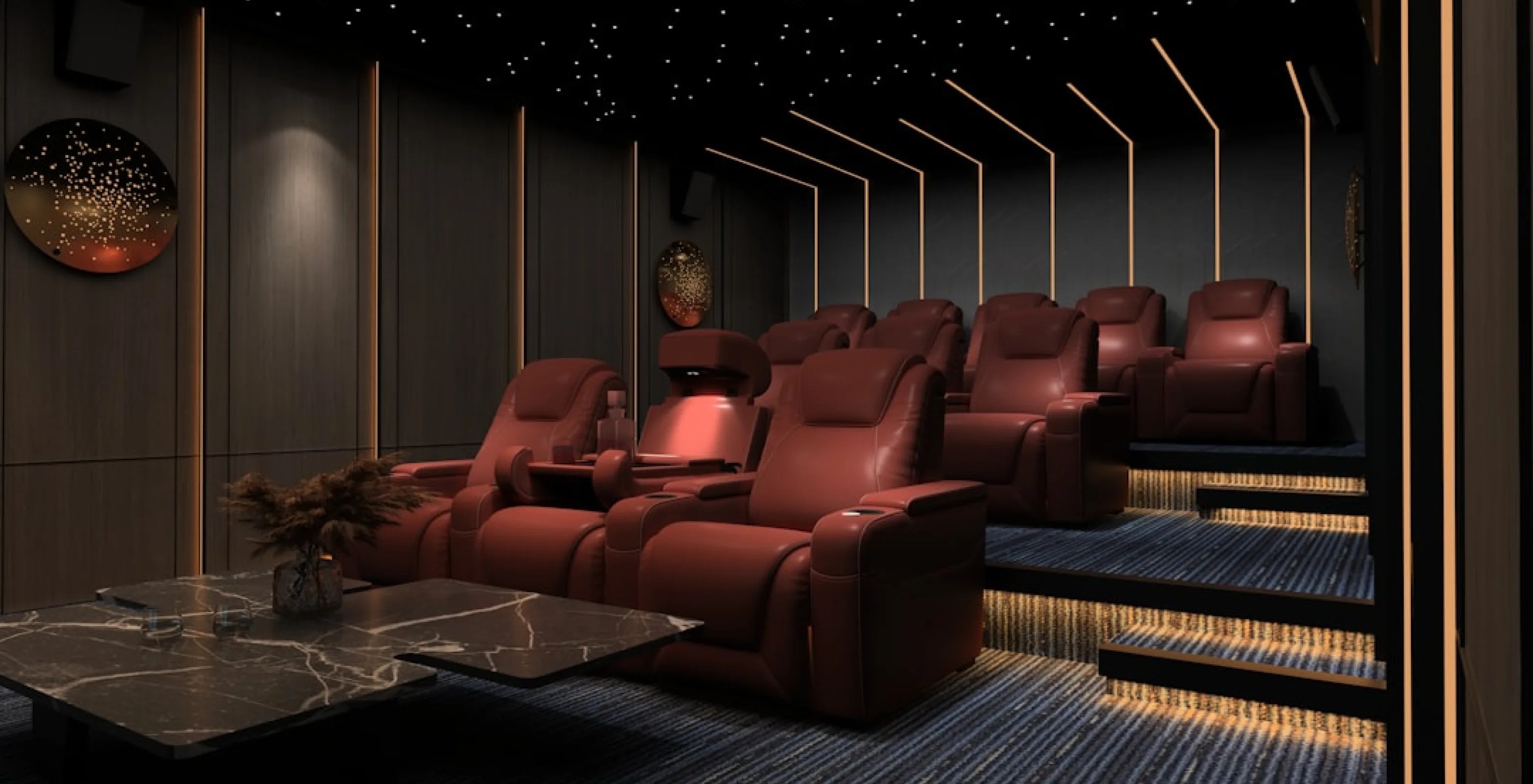
How Much Does a Home Theater Cost? A Room-by-Room Budget Guide
Share
You've pictured the room: a dark accent wall, a big screen, a row of seats everyone will fight over. The one number missing is the budget, and that's usually where people get stuck.
Home theater cost isn't one figure. It's five categories added together, and each one gets its own line in the plan: room prep, the screen or projector, the audio system, the seating, and finishing touches like lighting and acoustic wall panels.
CEDIA, the trade association for the home-technology industry, lists a budget home theater at about $1,000 to $7,000, a mid-range one at about $13,000 to $32,000, and a high-end one at $65,000 and up (CEDIA home theater costs). Those ranges cover the whole room and change over time, so treat them as planning anchors, not a quote for any one category.
Each category below shows what it typically covers, so you can build your own budget piece by piece instead of chasing one all-in number. Start with our home theater seating lineup and build the rest of the budget around it, since seating is the one line item you'll touch every single movie night.
The Short Answer: Home Theater Cost Comes Down to 5 Line Items
Every home theater budget, whether it's a small media-room refresh or a full dedicated build, breaks into the same five buckets.
Most people pricing out a home theater are really pricing out two separate projects that happen to share a room: the AV system (screen, audio, cabling) and the furniture (seating, risers, decor). Planning them as separate line items, rather than one blended number, is what makes the budget manageable.
- Room prep - flooring, paint, light control (blackout curtains or a dedicated door), and any framing for a riser or platform.
- Screen or projector - a large TV at the low end, or a projector, screen and mounting hardware for a dedicated room.
- Audio - anything from a soundbar to a full surround system with in-wall or in-ceiling speakers.
- Seating - the number of seats, the row configuration, and which comfort features (heat, massage, power recline, zero gravity) you add.
- Finishing touches - acoustic wall panels (wall coverings designed to absorb sound), lighting, riser platforms for a second row, and decor.
Quick check: list these five buckets on paper and circle the ones you already know you want, like a dedicated room or zero gravity seats. That circled list becomes your starting budget, even before you attach a single number to it.
Video and audio usually swing the total the most, since a projector-and-screen combo or a full surround system can cost many times more than a large TV and a soundbar. Seating and room finishes are more predictable, because they scale with seat count and material choice rather than jumping around by brand tier.
If you're working with an existing space and a modest screen, your real planning work happens in the seating and finishing-touches buckets, the two categories you control most directly.
Home Theater Budget Tiers: Budget, Mid-Range and High-End
CEDIA groups home theaters into three tiers by total investment: Budget, Mid-range and High-end. The dollar figures below are CEDIA's. The room, video, audio and seating columns are our own examples of what each tier might include, and seating is described by seat count and feature level, not price, since that part of the budget is yours to size against our product pages.
| CEDIA tier | Room setup | Video | Audio | Seating example (by feature) | CEDIA range |
|---|---|---|---|---|---|
| Budget | Existing room, minimal prep | Large flat-panel TV | Soundbar or basic surround kit | 2-3 seats, manual or power recline | about $1,000 to $7,000 |
| Mid-range | Existing room with some prep | Quality large TV, or a projector and screen | Multi-speaker surround system | 3-4 seat row, power recline, heat and massage or zero gravity | about $13,000 to $32,000 |
| High-end | Custom room, may include construction | Large projector and screen | Full surround or immersive audio system | 4-5 seat row or curved layout, zero gravity, power headrest, second-row riser | $65,000+ |
CEDIA's ranges are for the whole system and room, they shift over time, and they aren't what any single retailer charges. Your own total depends heavily on whether you're renovating an existing room or building one from scratch, so find the tier that matches your situation first, then use the seating column inside it as your starting point for row size and feature level.
Within any tier, seating is the part you control most directly. A single-row, 3-seat setup with manual recline costs meaningfully less to spec than a 5-seat curved layout with heat and massage, and power headrests, even though both are "home theater seating." That's the real lever inside your seating line item, covered next.
What Drives Home Theater Seating Cost
Three factors move a seating budget more than anything else: how many seats you need, what they're upholstered in, and which comfort features you add.
Seat count and row width. Row widths vary by model and configuration: a standard 2-seat row runs about 62-86 inches, a 3-seat row about 90-126 inches, and a 4-seat row about 117-164 inches, so check the exact width on the product page. Quick check: measure your wall before you shop. That one number tells you how many seats fit before you start comparing features, since a row that's too wide for the space isn't a budget option at any price tier.
Upholstery. Leather and performance fabric price differently depending on grade and where a manufacturer sources it. Fabric rows are often the lower-cost starting point in a lineup, with premium leathers at the top. See our guide to leather types explained for how the different leather types and performance materials compare on feel and care.
Comfort features. Power recline, heat and massage, power headrests (headrests that adjust at the touch of a button), power lumbar (an adjustable lower backrest cushion) and zero gravity recline (a deep, legs-raised position named after the neutral body posture NASA documented in weightlessness) each add to the base cost of a seat. Zero gravity and heat and massage tend to be the biggest single upgrades within a row.
It's a bit like optioning a car. Your wall measurement fixes the frame (seat count and row width), and upholstery and comfort features are the options list from there, which is where the total actually moves.
The straightforward way to budget seating: decide your row size from your wall measurement, pick fabric or leather, then add features one at a time and watch how each changes the total on the product page. That's a more useful exercise than hunting for a single "average price for theater seats," since a 2-seat fabric loveseat and a 5-seat leather row with every feature are both "home theater seating" at very different costs.
Where to Save vs. Where to Splurge
Not every category deserves the same share of your budget. A few swaps save real money without changing how the room feels, and a few areas are worth protecting.
Save here: - Room finishes first. Paint, basic flooring and blackout curtains do most of the light-control work for a fraction of a full construction budget. - Add a riser later. SoundRight riser platforms come in 7" and 14" heights, so you can start with a single row and add a second, raised row when the budget allows, rather than building risers into the initial project. See the complete home theater riser guide for the height math. - Start with fewer comfort features. A row of manual-recline seats in performance fabric is a legitimate starting point. You can move up to power recline or heat and massage on your next seat or your next room.
- Browse our Home Theater Risers
Splurge here: - Seating itself. It's the one line item everyone in the room touches for hours every viewing session, and it's the most expensive thing to swap out later once a row is built into your layout. - Wall panels. Acoustic wall panels are designed to absorb sound reflections in a hard-surfaced room, and they're a relatively small line item next to a full AV system. - Request samples before you commit. Sample swatches are available for many upholstery options, so you can check color and texture against your room's lighting before you commit a seating budget to one finish. Contact the team to request them.
- Browse our Acoustical Wall Panels
Is Home Theater Seating Worth the Investment?
For most home theaters, yes. Seating is the line item you use every time the room is in use.
A projector might run a few hours a week; the seats hold everyone in the room for every one of those hours, plus every regular-TV night in between.
Our best-selling row, the Luminis Zero Gravity Home Theater Seating with Heat & Massage, shows why: it pairs zero-gravity recline with heat and massage in a row format, so the seating upgrade compounds every time the row gets used, not just during movies. That's a different value equation than a screen or receiver upgrade, which mostly matters when you're actively watching something new.
A few details make the seating line item easier to plan:
-
Free shipping on every seat anywhere in the continental US.
-
24-hour shipping on qualifying in-stock seats ordered before 2pm PST (restrictions apply), which can matter if you're finishing a room on a deadline.
- Sample swatches for many upholstery options, so you're not committing to leather or fabric sight-unseen. Contact the team to request them.
If you're not sure where seating fits in your overall budget, compare the product pages by feature tier.
Putting the Budget Together
Start with the room and screen decisions covered in our guide to building a home theater, then work backward into a seating budget once you know your wall width and row count.
A realistic sequence looks like this: measure the room, pick your screen and audio tier, choose your row size and upholstery, then layer in comfort features and finishing touches like wall panels and a riser as the budget allows.
None of these decisions has to happen at once. Most home theaters are built in stages, with seating and the screen first, and lighting, panels and a second row added over time.
Bottom line: budget by category, not by a single number, and build the room in the order you'll actually use it.
If you're still unsure, our product specialists are on the customer help line during business hours at 1-800-407-8665.
About this guide: 4Seating has been selling home theater seating since 1997, including the theater seats and sofas covered here.